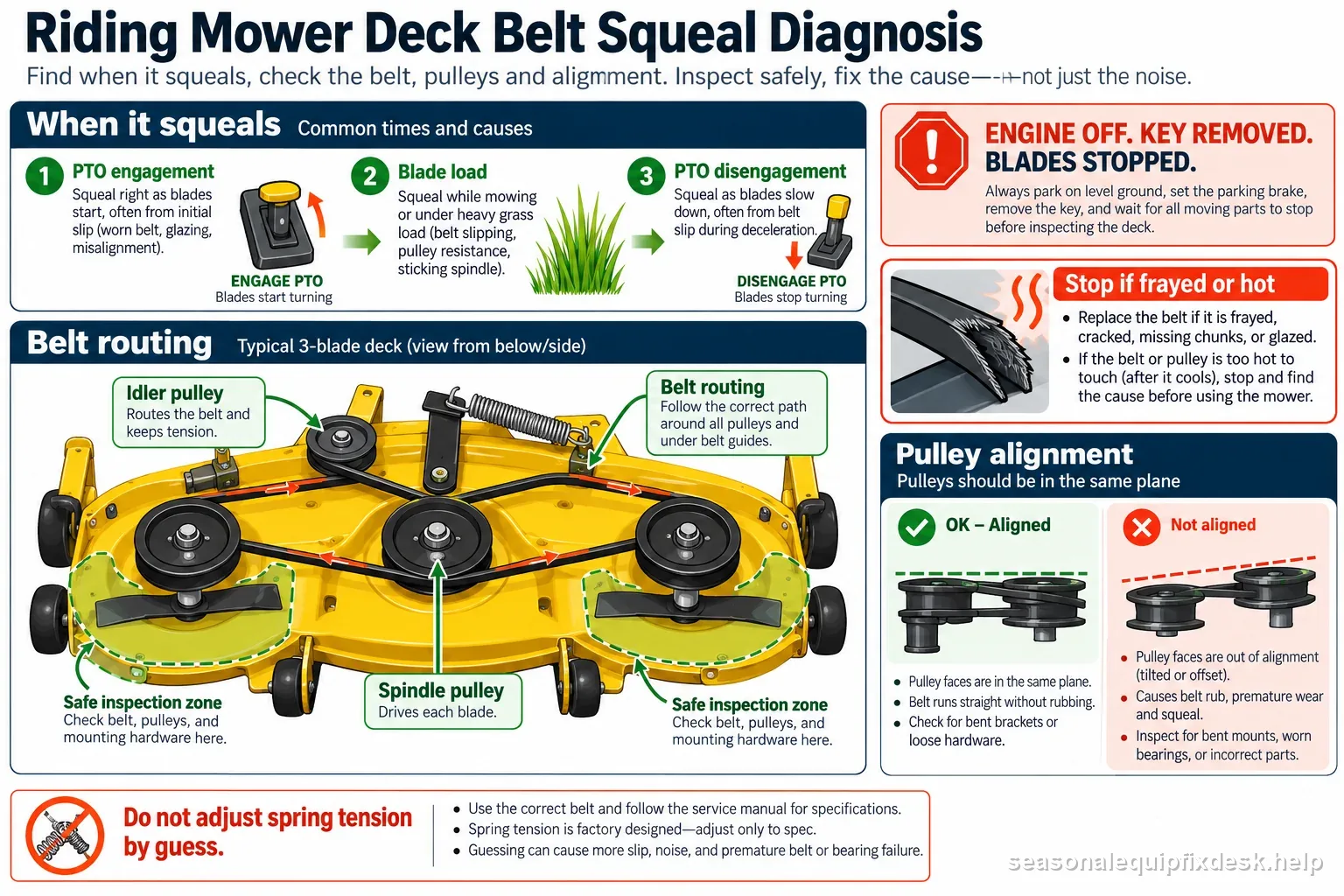
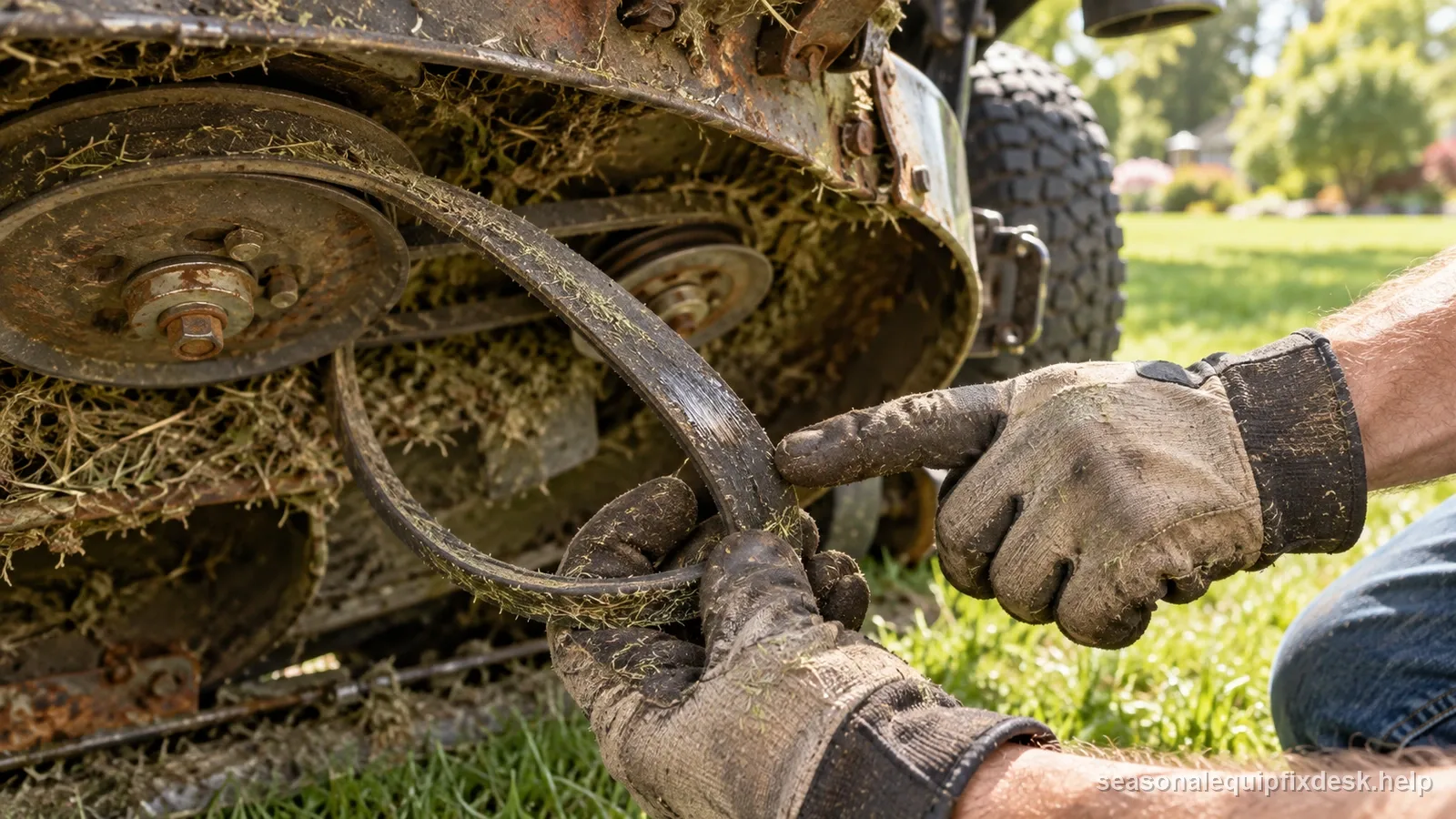
Quick answer: A mower deck belt squeal can come from a glazed belt, incorrect routing, a seized or misaligned pulley, excessive grass load, or the deck’s tension system. The sound alone does not identify the failed part. Record when it happens, inspect only with the machine fully disabled, and use the exact deck manual for routing and tension details.
A sudden shake when blades engage can come from more than belt slip. Use the mower vibration symptom guide to distinguish blade impact, balance, and spindle clues before replacing a belt.
If the belt and pulley look intact but vibration follows the cutting assembly, the engaged-blade vibration checks cover the stop-and-service boundary.
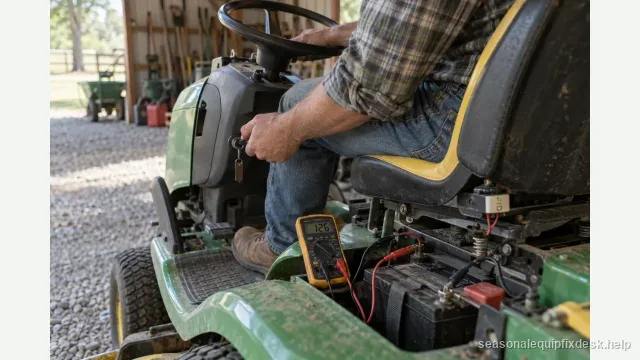
Make the machine safe first. Park on level ground, disengage the blades, set the brake, stop the engine, remove the key, and wait for every part to stop. Disconnect the spark-plug lead or battery as the manual directs before reaching near the belt. Never inspect or adjust a running deck, reach under a raised mower supported only by a jack, or pull a tension spring by hand. Springs and belt drives can release stored energy; model-specific removal and installation belong to a trained technician if you lack the specified tool or procedure.
Match the sound to when it occurs
| When or what you notice | Possible causes | Useful next step |
|---|---|---|
| Brief chirp exactly as PTO engages | Some models allow a short engagement chirp; belt slip or load can also sound similar | Check the exact manual; stop if it persists, worsens, or accompanies smoke or belt dust |
| Squeal continues while blades are engaged | Glazed belt, wrong route or part, pulley drag, misalignment, or tension fault | Disable and inspect the full visible belt path and belt condition |
| Noise occurs only in tall or wet grass | High blade load may expose a marginal drive or dull/dragging blade condition | Wait for dry grass, use the mower’s recommended cutting height, and inspect for damage |
| Grinding, wobble, smoke, burning smell, or belt dust | Possible bearing, alignment, belt, or blade-drive failure | Stop immediately; do not restart until the cause is identified |
| Observed pattern | Possible explanation | Safe next step |
|---|---|---|
| Brief chirp at engagement | May be model-specific; can also indicate slip | Confirm in the exact manual; stop if it persists |
| Persistent squeal while engaged | Belt, route, pulley, alignment, or tension fault | Disable machine and inspect visible belt path |
| Grinding, smoke, or burning odor | Possible bearing or drive failure | Stop immediately; do not restart |
| Only under heavy grass load | High load may reveal a marginal drive | Wait for dry grass and check for damage before mowing |
Inspect the belt without disturbing the tension system
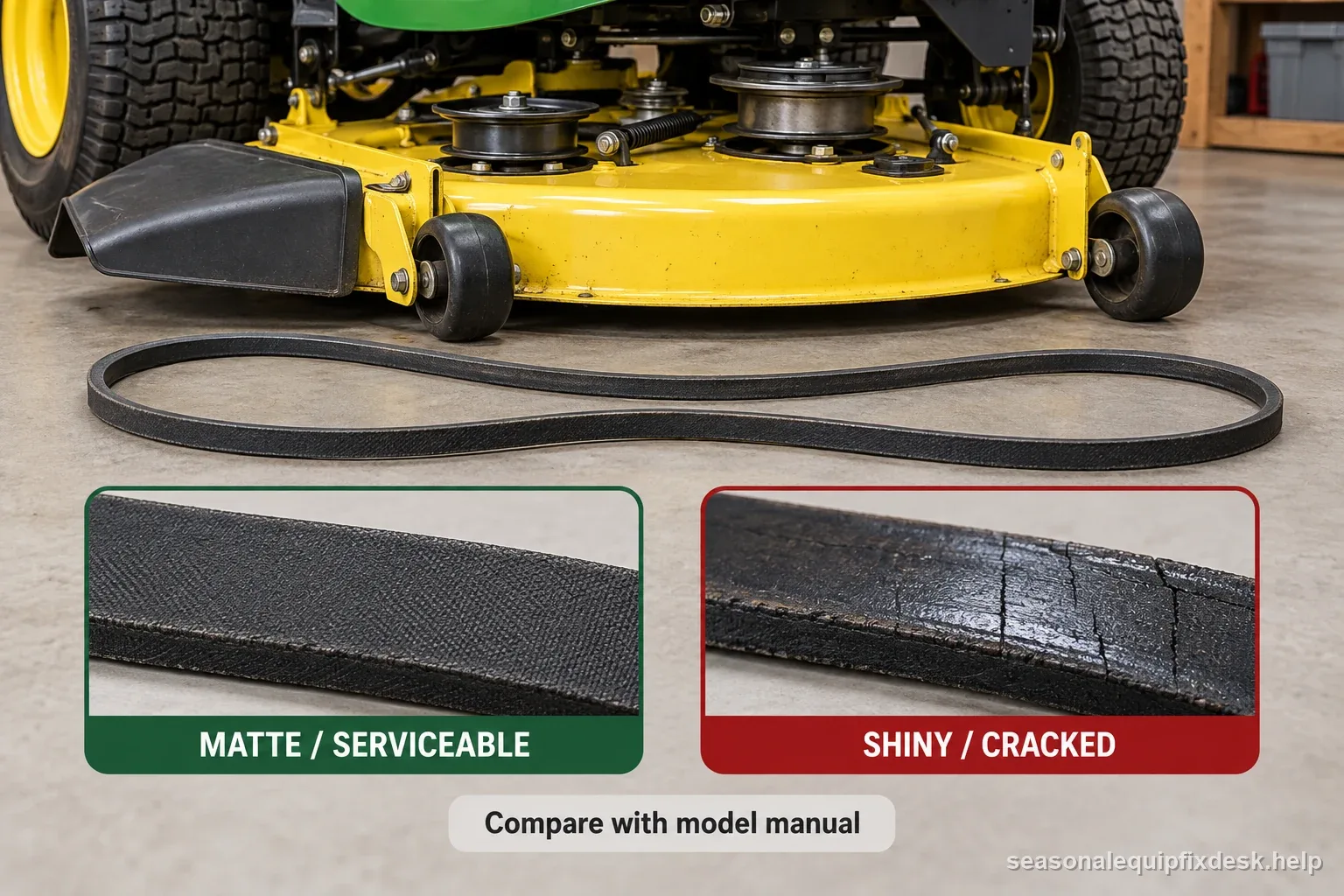
With the machine disabled and cool, use the owner manual to identify the deck belt and its inspection points. Look for a glossy or hardened contact surface, cracks, frayed edges, missing material, heat discoloration, or rubber dust. Check the belt part number and visible routing against the deck diagram. A wrong length or a belt routed on the wrong side of a guide can slip even when new. Do not remove guards or belt covers unless the owner procedure explicitly permits it.
Check for a pulley or routing problem
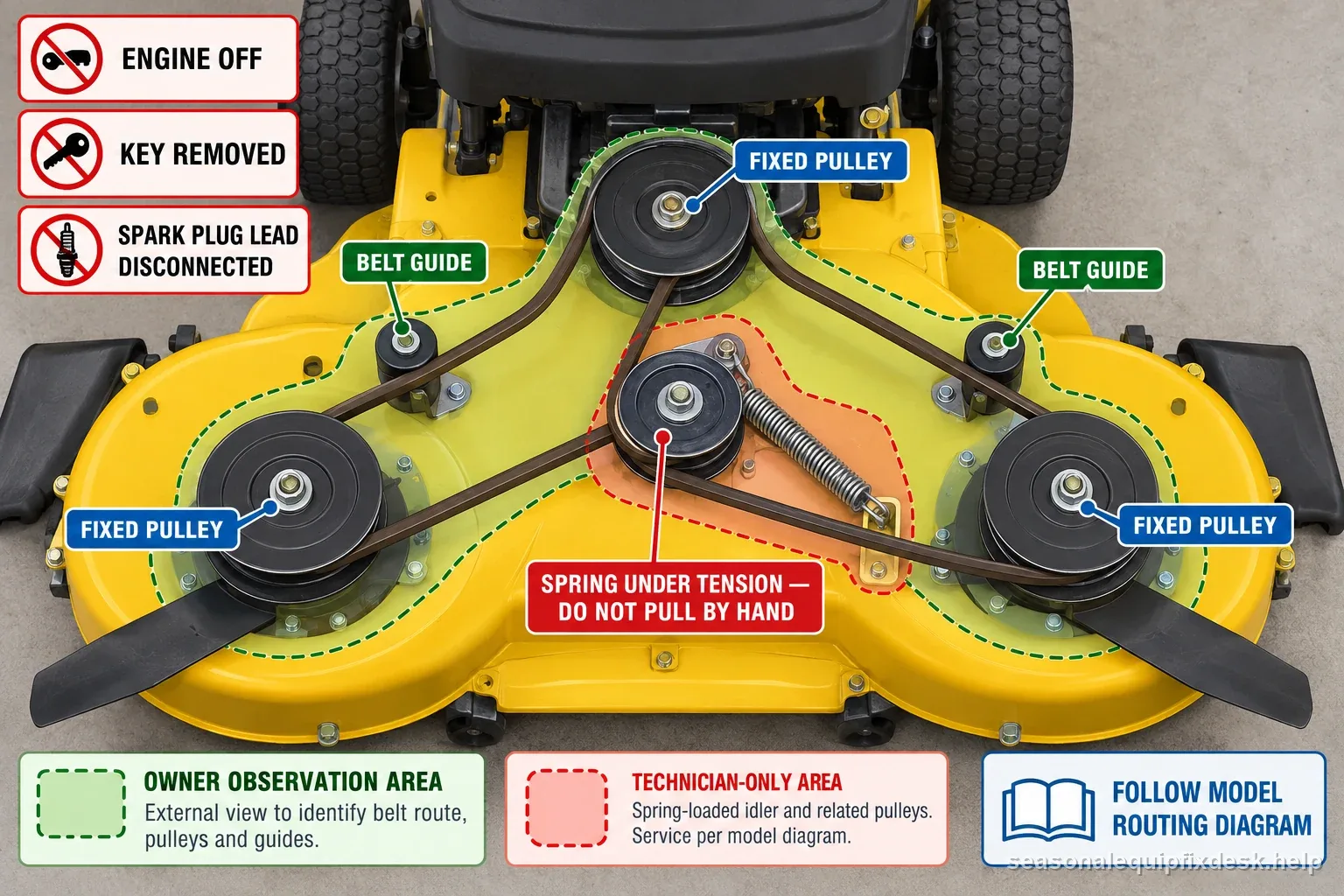
Look for packed grass, a bent guide, a loose-looking bracket, a belt riding outside a pulley groove, or an uneven wear pattern. Compare the route to the diagram for the exact deck because multi-belt systems and guide locations vary. A misaligned pulley or damaged blade spindle can throw a new belt off and create a repeat failure.
Do not test pulley bearings by spinning components while the belt remains tensioned, and do not remove the belt to free-spin pulleys unless the manual gives an owner-safe method. The idler spring can snap back and pinch or injure you. A spring that looks disconnected, stretched, corroded, or damaged is a stop-and-service condition; do not pull it to judge its strength.
Do not guess at belt tension
Many residential decks use a spring-loaded idler; others have different or model-specific arrangements. There is no universal thumb-deflection value that applies to every belt length and deck. Do not tighten an adjustment bolt or substitute a stronger spring unless the manual specifies that adjustment and part. If the belt appears loose, the idler arm is damaged, or a spring needs removal, use the correct service procedure or arrange repair.
Grass conditions can reveal a marginal drive
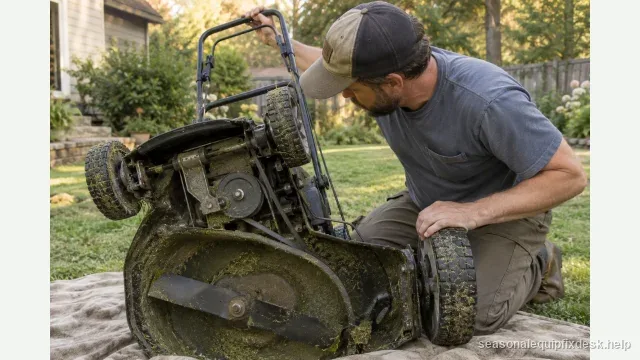
Wet, tall, or unusually dense grass increases blade load and may make an existing belt or pulley problem more noticeable. It does not prove the belt is merely slipping. Stop if you smell burning rubber, see smoke, hear grinding, or see the belt leave its guides. Once the machine is safe, clear debris only as the manual instructs and check blade condition from an approved position; never reach under an unsupported deck.
| When the squeal occurs | Possible branch | Safe next step |
|---|---|---|
| As PTO engages | Belt slip, alignment, or load change | Stop, key out, inspect visible wear only |
| While cutting heavier grass | Attachment load, pulley drag, or belt condition | Compare under the same mowing conditions |
| As PTO disengages | Belt deceleration or pulley bearing issue | Stop if hot, damaged, or persistent |
The timing narrows the inspection; belt routing, tension, and spring adjustments remain model-specific.
Use a safe order before replacing parts
- Record whether the noise begins at PTO engagement, continues during mowing, or appears only in heavy grass.
- Park level, disengage the deck, stop the engine, remove the key, wait for all movement to stop, and isolate the spark plug or battery as directed.
- From approved access points, inspect the belt for glazing, cracks, edge damage, rubber dust, and visible misrouting.
- Compare belt size and routing with the exact model and deck manual; do not rely on a generic diagram.
- Stop and arrange service for damaged guides, loose or bent hardware, a suspect bearing, a damaged spring, or any belt removal requiring a tension tool.
- After a repair, reinstall all guards and covers and verify the machine is reassembled as specified before any normal operation.
Retest only in the normal operating configuration
Do not run the deck raised, with a guard removed, or while anyone is near the discharge or belt path. If the manual permits an owner retest, use a clear, level mowing area, keep all guards installed, and follow its exact PTO and operating procedure. Disengage and shut down at the first persistent squeal, smoke, vibration, or abnormal noise. A brief chirp is acceptable only if the manual for that precise model says so.
When the belt is not a do-it-yourself repair
Repeated belt loss, a spring under tension, a pulley that appears tilted, damaged spindle hardware, burning odor, or uncertainty about supporting the deck calls for a qualified mower technician. Tell them the model and deck numbers, when the sound occurs, whether the belt was recently replaced, and what visible wear you found. That evidence helps avoid replacing a belt when the underlying alignment or bearing fault remains.
- Exact mower and deck model numbers
- When the sound starts and whether it continues
- Whether the belt was recently replaced and its part number
- Visible glazing, cracks, belt dust, damaged guide, or misrouting
- Any grinding, vibration, smoke, or burning odor