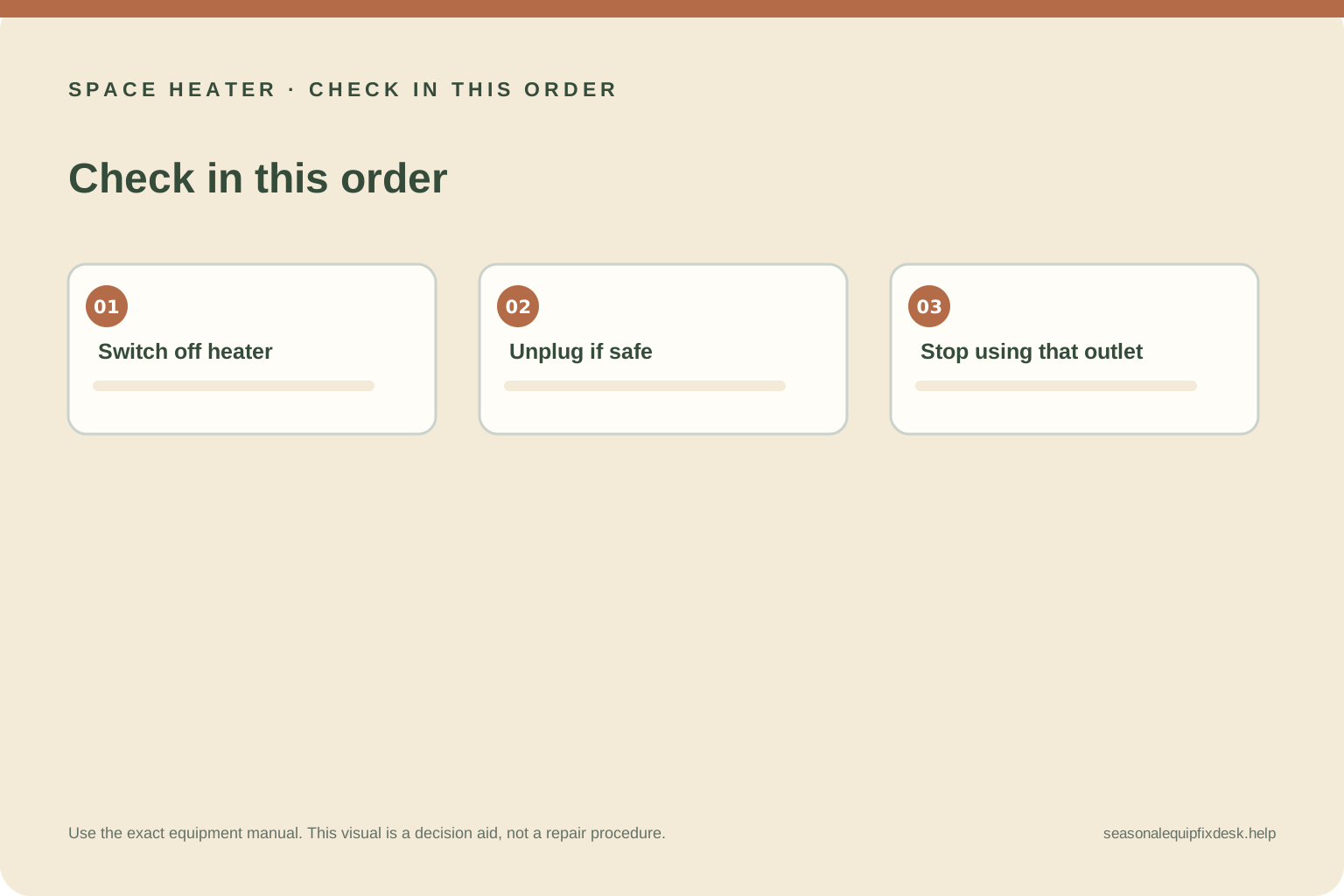
Quick answer: If a space-heater plug or cord feels hot, switch the heater off and stop using it. Unplug it only if you can do so without touching a hot, melted, sparking, or damaged area. Do not plug it into another outlet to test it, use an extension cord or power strip, or reset a tripped breaker repeatedly. A hot, loose, discolored, or damaged outlet should be checked by a qualified electrician.
A space heater draws substantial electrical power, and heat at a plug can come from a loose connection, damaged cord, overloaded circuit, worn receptacle, or appliance fault. You cannot determine which cause is present by touch alone. Treat unusual heat, a burning smell, buzzing, discoloration, melting, smoke, or repeated trips as a stop-use warning.
Make the area safe first
If there is smoke, active sparking, fire, or a burning smell that continues after the heater is off, move away and contact emergency services. Do not pour water on electrical equipment. If the plug is merely warm but not damaged, switch off the heater and unplug it by the plug body only if the cord and receptacle are cool enough to touch safely. If they are hot or fused in place, do not pull; turn off the circuit at the breaker only if you can do so safely and contact an electrician.
Do not touch a melted plug, charred receptacle, frayed cord, or exposed conductor. Keep people away from the outlet and heater. Do not try to bend prongs, tighten the receptacle, open the heater, or use a screwdriver to check the wall outlet. A visual photograph taken from a safe distance can help an electrician, but do not move the damaged parts to get a better view.
Look for warning signs without touching the hot area
When everything is off and cool, look from a safe distance for brown or black marks, softened plastic, a loose faceplate, a plug that sat crooked, a damaged cord, or a heavy appliance sharing the same outlet. Note whether the breaker tripped, whether the plug was difficult to remove, and whether the heater was connected through an extension or power strip. Do not re-energize the circuit to reproduce the problem.
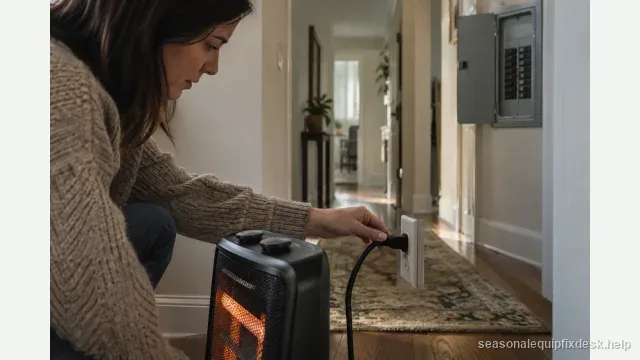
Electrical Safety Foundation International and the U.S. Consumer Product Safety Commission advise plugging portable electric heaters directly into a wall outlet, not an extension cord or power strip. This is a safe-use rule, not a fix for an outlet that has already overheated. Moving the heater to a different socket can hide a fault and create a second hazard if the appliance or cord is damaged.
Choose the next step from what you saw
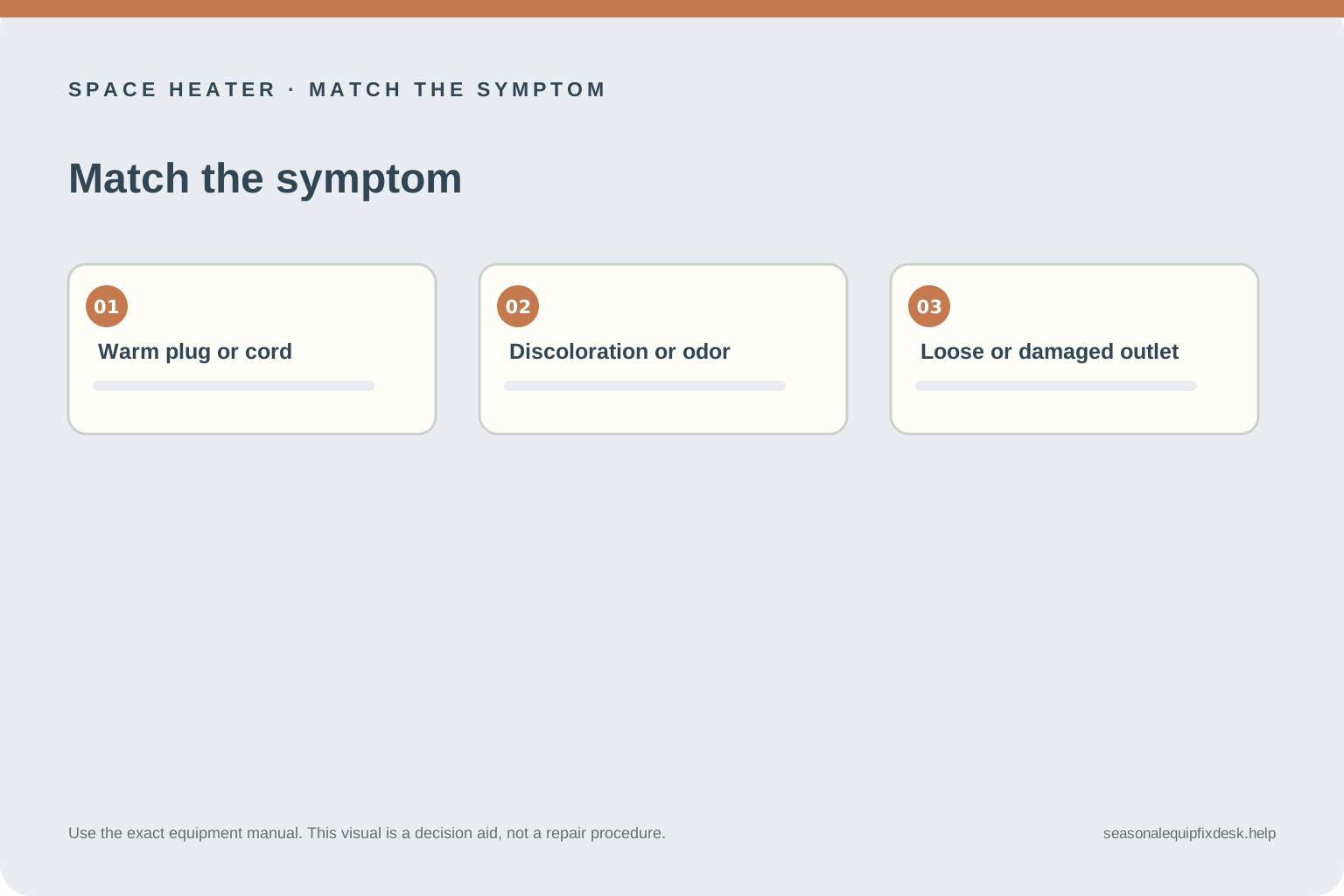
| Visible or reported sign | Possible issue | Safer response |
|---|---|---|
| Plug or cord feels hot | High resistance or overload | Stop heater use and request inspection |
| Brown mark, melted plastic, or crack | Heat damage or poor contact | Do not touch or reuse; call an electrician |
| Breaker trips more than once | Overload, wiring, or appliance fault | Leave the circuit off and get qualified help |
| Buzzing, smoke, sparks, or burning smell | Possible active electrical fault | Move away; use emergency response if needed |
Do not keep resetting or substituting parts
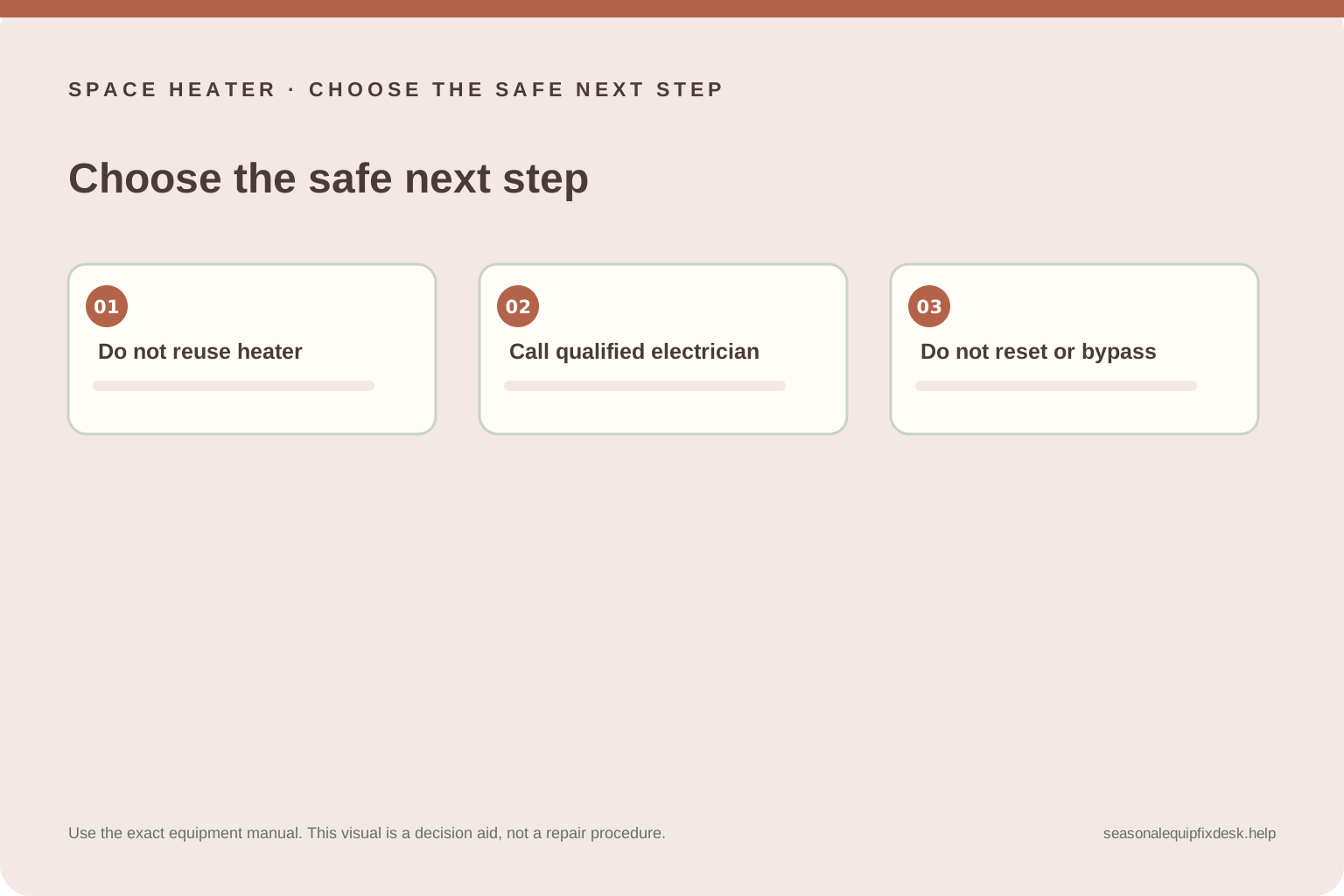
A breaker is a protective device. Repeatedly resetting it, replacing it with a higher-rated breaker, removing the ground pin, or plugging the heater into a power strip can increase fire or shock risk. Do not use an adapter to make a three-prong heater fit a two-slot outlet. Do not share the outlet with another high-draw appliance while you wait for inspection.
Do not replace a plug end or cord unless the manufacturer authorizes that repair and a qualified person performs it. A space heater’s cord, strain relief, internal wiring, and overheat protection are part of a tested appliance design. Tape, solder, generic replacement cords, and DIY rewiring can change its safety characteristics. Follow the warranty and authorized service instructions.
Have the correct person inspect the heater and receptacle
If the outlet is loose, discolored, hot, cracked, buzzing, or smells burnt, contact a licensed electrician to inspect the receptacle and circuit. If the outlet looks normal but the heater cord or plug is damaged, contact the heater maker or an authorized appliance service provider. When both may be affected, tell the electrician and heater service provider what happened so the entire connection path is considered.
Give the technician the heater make and model, circuit breaker label, whether other equipment shared the outlet, how long the heater ran, and any odor, discoloration, sound, or trip. Keep the heater unplugged and tag it “do not use” while waiting. Do not let another household member plug it in to see whether the warmth returns.
Use a heater safely after the fault is cleared
Return a heater to service only after the maker or qualified service provider says it is safe and the outlet or circuit has been cleared for use. Read the manual, place it on a stable level surface, maintain the manufacturer’s clearance from combustible materials, and plug it directly into a wall outlet. Do not leave it unattended or running while asleep, and keep the cord out of traffic paths.
If the heater or receptacle has been damaged, do not rely on a new outlet alone. A service provider should decide whether the appliance itself remains suitable for use. A safe replacement heater should carry a recognized testing-laboratory label and be used exactly as its manual describes.