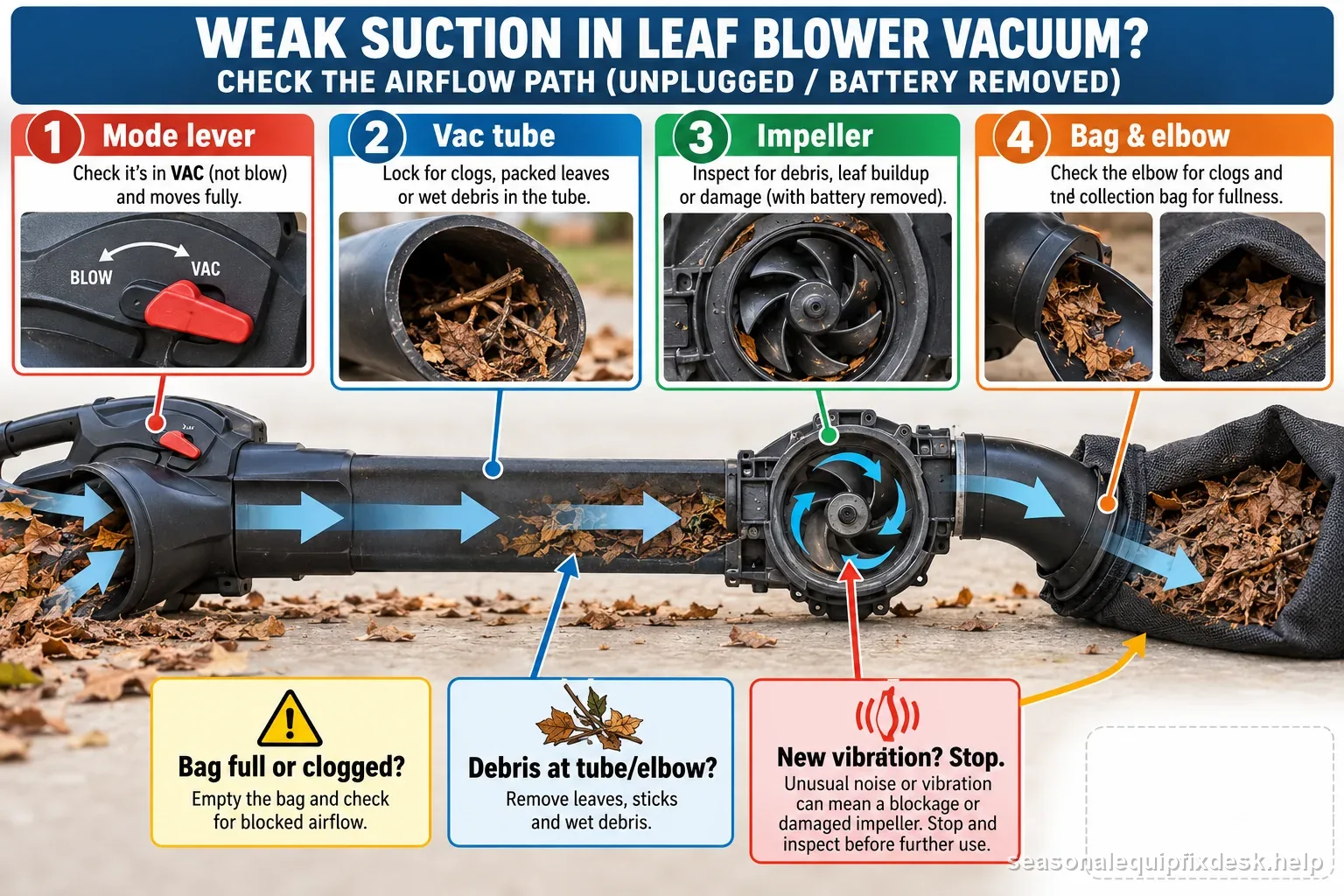
Quick answer: Most leaf blowers that suddenly lose suction in vacuum mode have a blockage or a leak somewhere between the inlet and the bag. Work the airflow path in order (mode selector, inlet and tube, impeller, bag) before assuming the unit itself is worn out. A motor that still runs at full speed but moves almost no air is nearly always an airflow problem.
If the gas blower will not start at all, use the no-start sequence before diagnosing airflow or vacuum attachment problems.
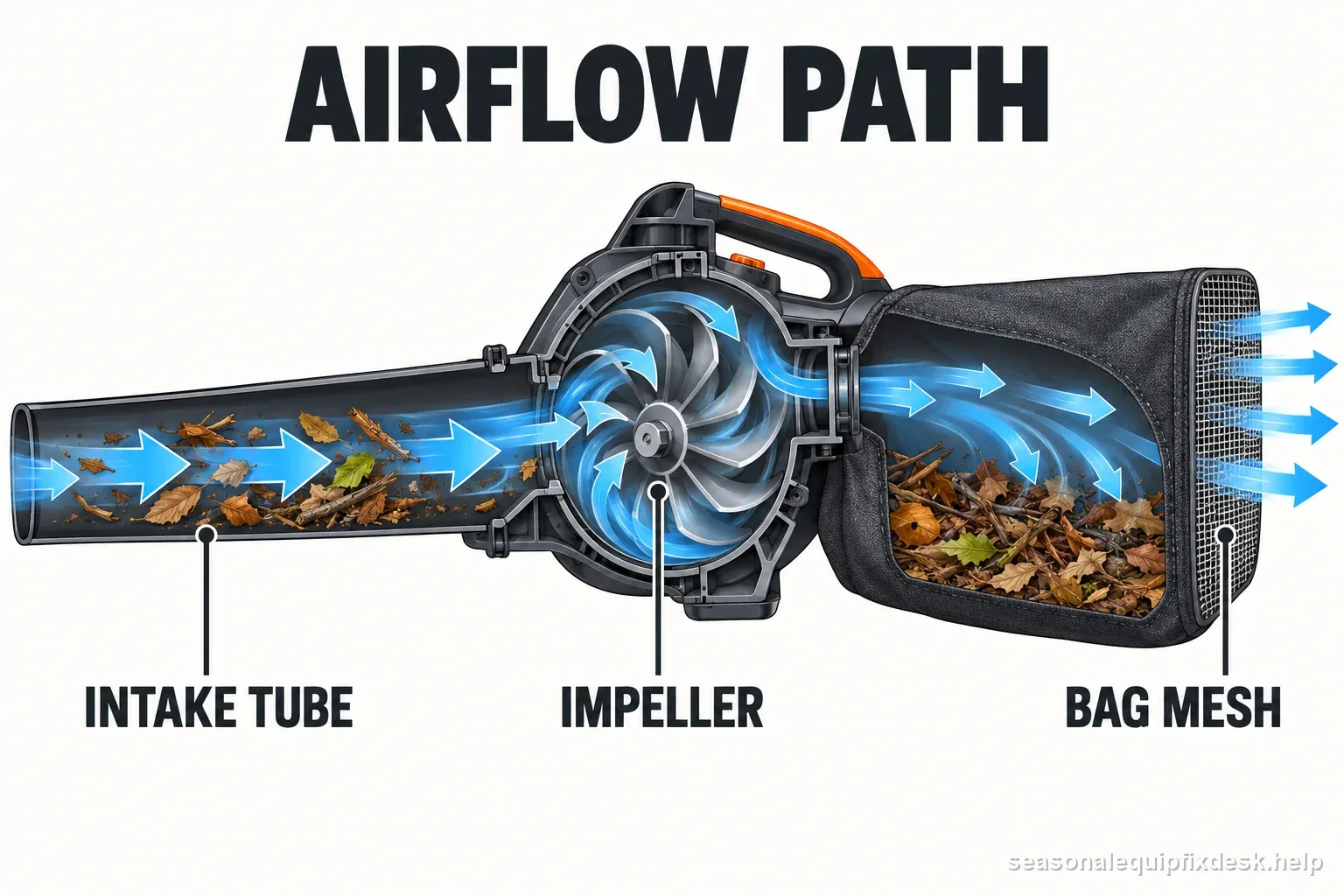
- Compare blower and vacuum modes.Weak pickup in vacuum mode only keeps attention on the vacuum attachments and airflow path.
- Check the bag before opening the housing.Empty it, inspect the dry mesh, and confirm the collar and fasteners seat fully.
- Isolate power before clearing a clog.Remove the battery or unplug; for gas, stop the engine and isolate ignition.
- Stop for new vibration or impeller damage.Use the exact model manual or service center for internal access and repairs.
Confirm the mode selector is fully set to vacuum
Handheld blower-vacuum combos switch functions with a lever, a removable tube, or both. A selector that is not fully seated in vacuum position is one of the most common reasons suction feels weak instead of absent. Shut the unit off, and on a corded or battery model remove the power source. Then check that the mode lever is pushed to its full stop and that the vacuum tube, rather than the straight blower tube, is the one installed and locked. On models that use different tubes for each mode, a vacuum tube that is not fully twisted or clipped into place can leak enough air at the joint to weaken suction. The motor will still sound normal.
Clear the intake and tube before suspecting the motor
With the unit off and the power source disconnected, look straight down the inlet opening and through the length of the tube. You are looking for packed leaves, a lodged stick, or matted wet debris. A partial clog is often worse for suction than a full one. Air keeps moving fast enough to sound normal, but barely enough volume gets through to lift leaves off the ground. Wet, shredded leaves are especially prone to packing into a paste at a bend in the tube instead of staying loose enough to pass through.
On models with a removable or hinged inlet screen, check that the screen itself is not caked with fine debris. It is designed to keep sticks and stones out of the impeller, and it can quietly choke airflow long before it looks obviously blocked.
| What you notice | Likely check | Safe next step |
|---|---|---|
| Blower mode is strong; vacuum is weak | Mode selector, vacuum tube, bag seal | Seat the vacuum parts fully, then inspect the bag and joints. |
| Pickup drops as the bag fills | Bag mesh or elbow restriction | Empty and clean the bag as its manual allows; let it dry before use. |
| New vibration, scraping, or damaged impeller | Internal damage or debris | Stop use and arrange model-specific service. |
Disconnect the battery or plug before clearing any blockage; gas models require the manual shutdown and ignition-isolation steps.
Inspect the impeller, the part that creates the suction
The impeller is the multi-bladed wheel inside the housing that both shreds leaves and generates the vacuum pulling them in. A damaged or heavily worn one is a real cause of weak suction, not just a clogged tube. With the power source removed and the inlet or housing opened per the manual, look for cracked, chipped, or missing blade tips. Also look for debris (a small stick, a stone, or a wad of wet leaves) jammed between the blades and the housing wall. Spin the impeller by hand if the design allows it; it should turn smoothly with no grinding or sudden stop.
Even undamaged blades lose some effectiveness once they build up a layer of compacted plant residue, which changes their shape just enough to move less air per rotation. A clean, dry brushing of the blades and housing interior is a reasonable first step before concluding a part is broken.
Check the bag and its seal, not just its fullness
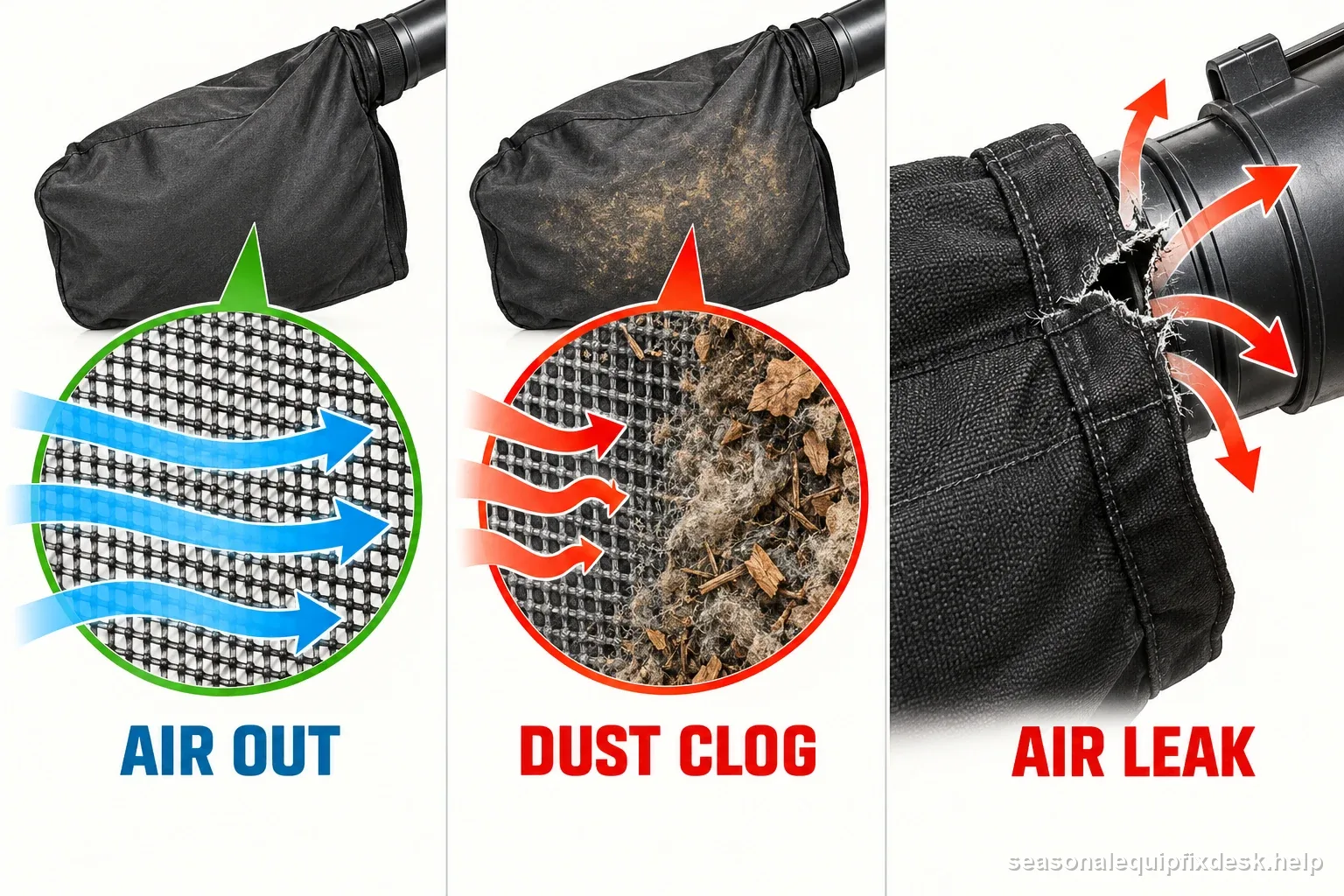
A debris bag creates the low-pressure side of the vacuum system. A bag problem shows up like a suction problem even when the impeller and tube are both clear. An overfull bag is the obvious case. But a bag that is only half full can still choke performance in three ways. Fine dust can clog its mesh from the inside. The zipper or drawstring closure may not be fully sealed. Or the bag's mounting collar may have a tear or a loose clamp, letting air escape around the connection instead of through the impeller.
Empty the bag completely and check the mesh for a fine, powdery clog. A light shake, or a rinse and full dry, can restore airflow through clogged mesh. Then confirm every seam and the mounting collar are intact. A bag with a small tear near the collar is easy to miss visually but leaks enough air at that one point to cut suction noticeably.
Battery and cordless-specific suction complaints
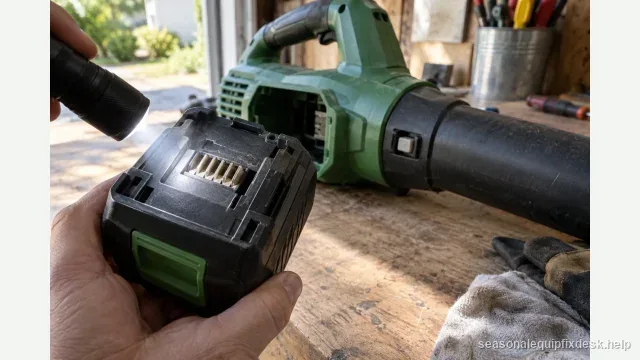
On battery-powered units, suction that fades gradually during a job points toward the battery more than a mechanical fault. That means low charge, or a battery near the end of its useful life. Suction that is weak from the very first pull of the trigger is a different story. Confirm the battery is fully charged on a known-good charger. If the unit supports multiple power modes, make sure it is set to a higher-power setting rather than an eco or quiet mode that intentionally reduces air volume. A battery that reads full but delivers weaker suction than it used to, across multiple charges, is more likely aging out than the blower failing. The clearest test is a second known-good battery on the same tool.
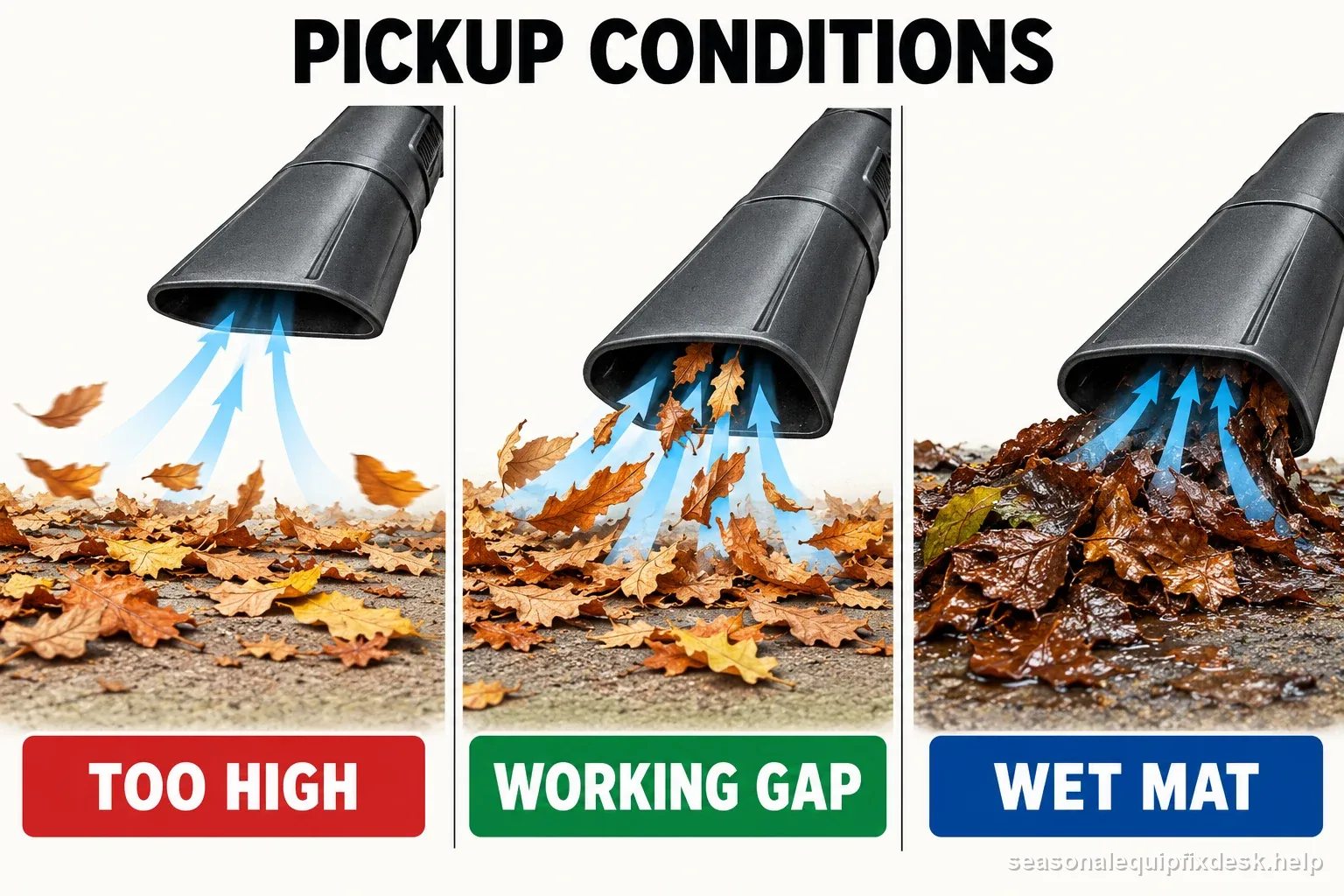
Nozzle height and technique also change how well leaves get picked up
Even a fully healthy vacuum has a limited window. The inlet has to be close enough to the ground to lift leaves efficiently, without also sucking in gravel or getting dragged through wet grass. A nozzle held too high skims over lighter leaves entirely; one dragged too low on gravel or mulch adds unnecessary wear and can contribute to future clogs. Heavy, wet, or matted leaves are genuinely harder for any consumer-grade vacuum to lift than dry, loose ones. A unit performing noticeably worse on soaked leaves than it did on dry ones from the same pile the week before is not necessarily developing a fault.
On a gas model, check the engine basics too
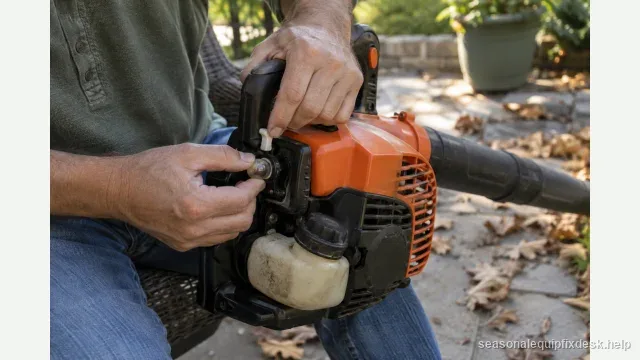
A gas blower that loses power in both modes points toward engine output, not just the vacuum path. Compare its sound in blower mode before opening the housing. For stored fuel, follow the engine manual instead of a universal age cutoff; inspect the filter and plug only as directed. A healthy blower mode with weak vacuum pickup shifts attention back to the tube, bag, and impeller.
Many handheld machines also have a small screen in the muffler, called a spark arrestor, that can clog with carbon and choke the exhaust. Your manual shows where it sits and how to clean it. Let the engine cool completely first, since the muffler stays hot long after shutdown.
Checking in order, cheapest fix first
| Observed change | First area to compare | Useful next check |
|---|---|---|
| Vac mode only | Tube, bag, or inlet | Seat fittings; inspect for a clog with power isolated. |
| Weak in both modes | Power source or engine | Try a charged pack or compare gas-engine behavior with its manual. |
| Drops as bag fills | Bag or mesh | Switch off, empty, and inspect the dry mesh and collar. |
| New rattle or vibration | Impeller or debris | Stop; isolate power and use the model access steps. |
- Confirm the mode selector and vacuum tube are fully seated in vacuum position, with power disconnected while you check.
- Look through the inlet and tube for a full or partial clog, including a caked inlet screen if the model has one.
- Open the housing per the manual and inspect the impeller for damage, jammed debris, or a heavy residue buildup.
- Empty the bag fully and check its mesh, seams, and mounting collar for a clog or a leak.
- On battery models, test with a second fully charged battery before suspecting the tool itself.
- If suction is still weak with all of the above confirmed clear, the impeller bearing or the motor itself is the remaining suspect. That is a reasonable point to involve a small-engine or power-tool repair shop.
Remove the battery or unplug the cord. For gas models, stop the engine and isolate ignition. Wait for every blade to stop, then follow the exact model manual before opening the fan housing.
Before you open the housing
Always disconnect the battery or unplug the cord, and on gas models stop the engine and disconnect the spark-plug lead, before opening any cover or reaching near the impeller. The blades are sharp enough to cut even while stationary. A unit that still has power connected can start unexpectedly if a trigger or switch is bumped during inspection. Reassemble every guard and cover as designed before running the unit again. An inlet screen or guard left off to test airflow removes a safety barrier along with whatever clog it was catching.
When weak suction is normal wear, not a fault to chase
A vacuum-mode leaf blower that has handled several full fall seasons of wet leaves, twigs, and fine dust will move noticeably less air than it did new. That happens even with a clean impeller and an intact bag, simply from years of small nicks and residue on the blades. If every item on this list checks out clean and the unit is several seasons old, compare its real-world performance against a repair or replacement cost. That is often more useful than chasing a small percentage of lost airflow that equipment simply loses over time.
For power faults, see cordless no-power checks.