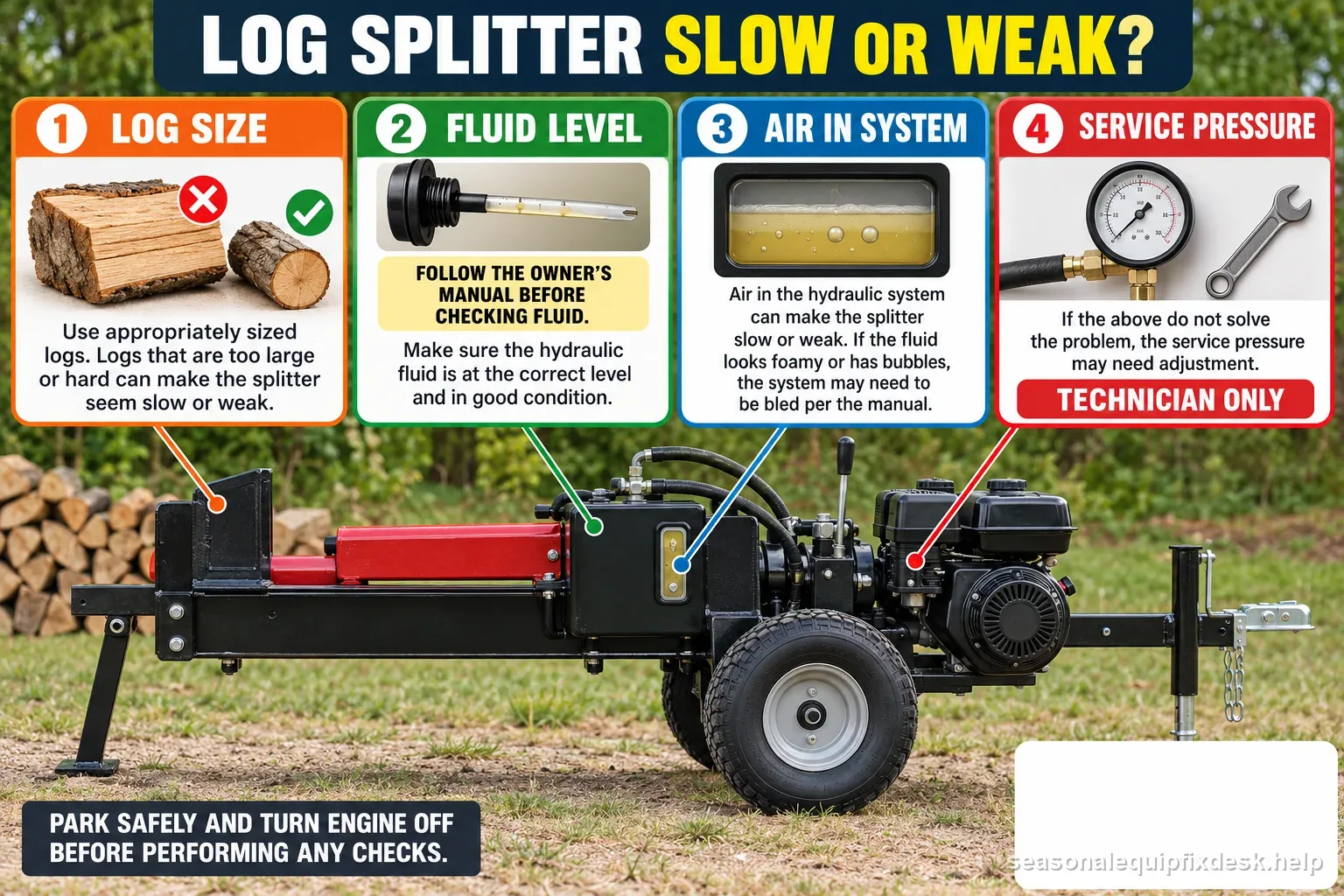
Quick answer: Separate slow movement from low splitting force. Hydraulic flow largely affects cylinder speed; pressure and cylinder area determine force. A ram that cycles slowly even with no log points to a different branch than one that moves normally but stalls on an ordinary, in-rating log. Neither symptom proves low fluid or a bad pump. Check the model manual and use safe external observations before escalating to a pressure test.
| Pattern | Possible cause | Owner check |
|---|---|---|
| Slow both directions | Cold oil, low level, restriction | Check per model procedure |
| Spongy motion | Air in oil | Use specified bleed cycle |
| Weak on dense logs | Grain, knots, or size | Compare within rated capacity |
| Leak or weak force | Valve, pump, cylinder | Depressurize; request service |
| Observed pattern | What it suggests | Safe next step |
|---|---|---|
| Slow extend and retract even with no log | Flow restriction, cold fluid, engine speed, filter or suction issue | Record temperature/noise; check level and service schedule by manual |
| Normal unloaded speed; stalls on ordinary rated wood | Load/pressure branch, relief, pump, valve, or cylinder bypass | Test only within rated capacity; leave pressure measurement to service |
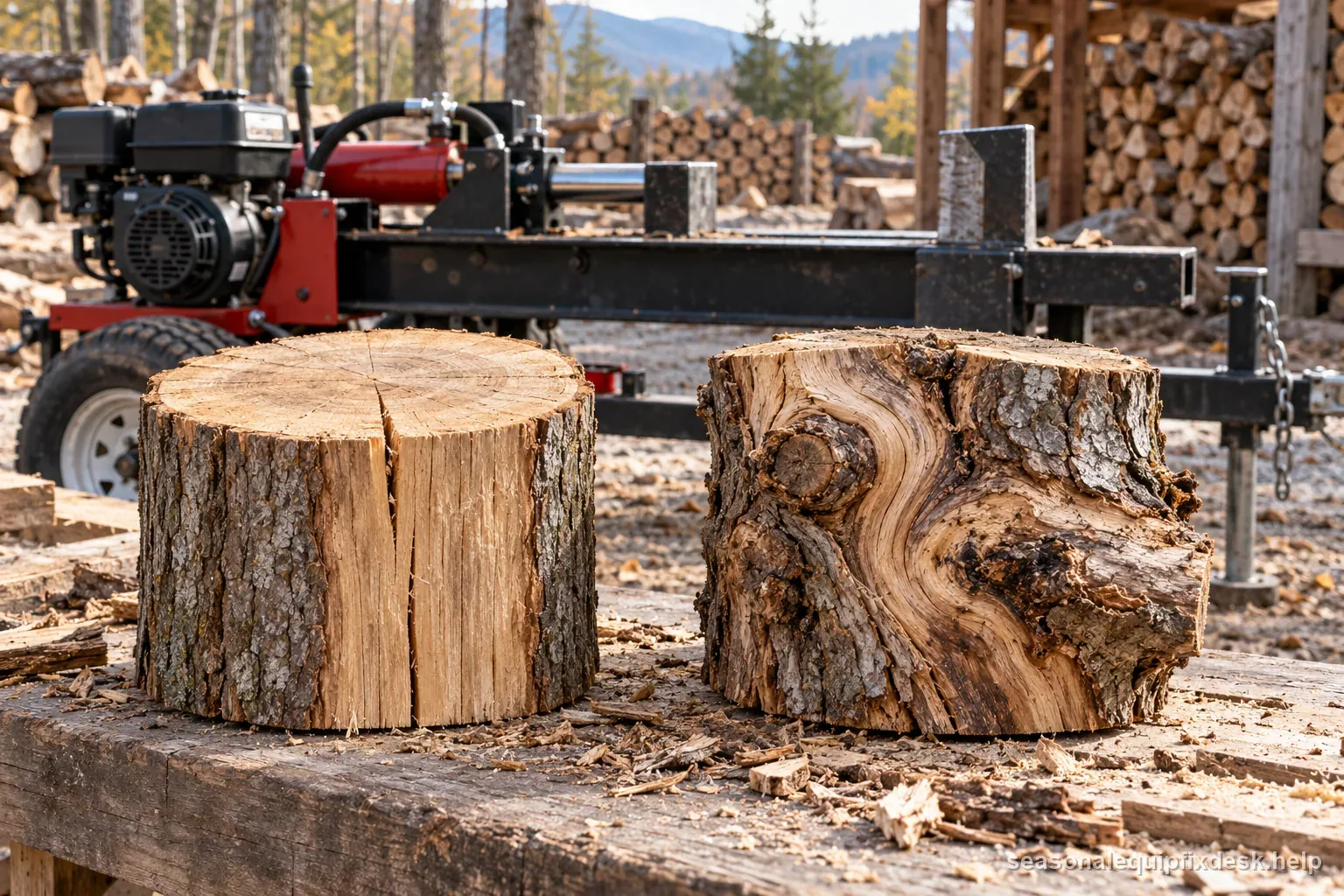
| Only one unusually knotty round stalls | Wood grain or size may exceed practical capacity | Try representative straight-grained wood within the rating |
| Jerky ram, pump whine, or foamy fluid | Possible aeration or suction restriction | Shut down and use only the maker’s purge/inspection procedure |
| Fluid loss or visible spray/leak | Hose, fitting, cylinder, or seal fault; injection hazard | Keep clear, shut down, and arrange qualified repair |
Start with the fluid level and condition
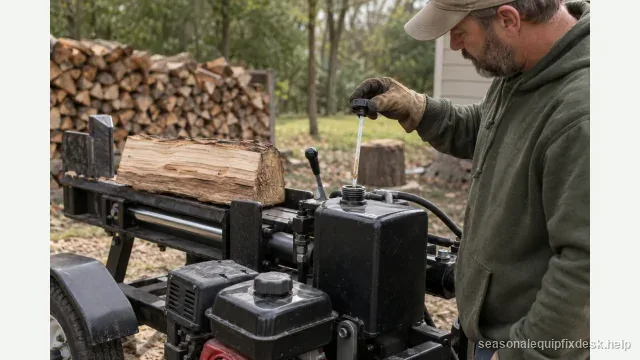
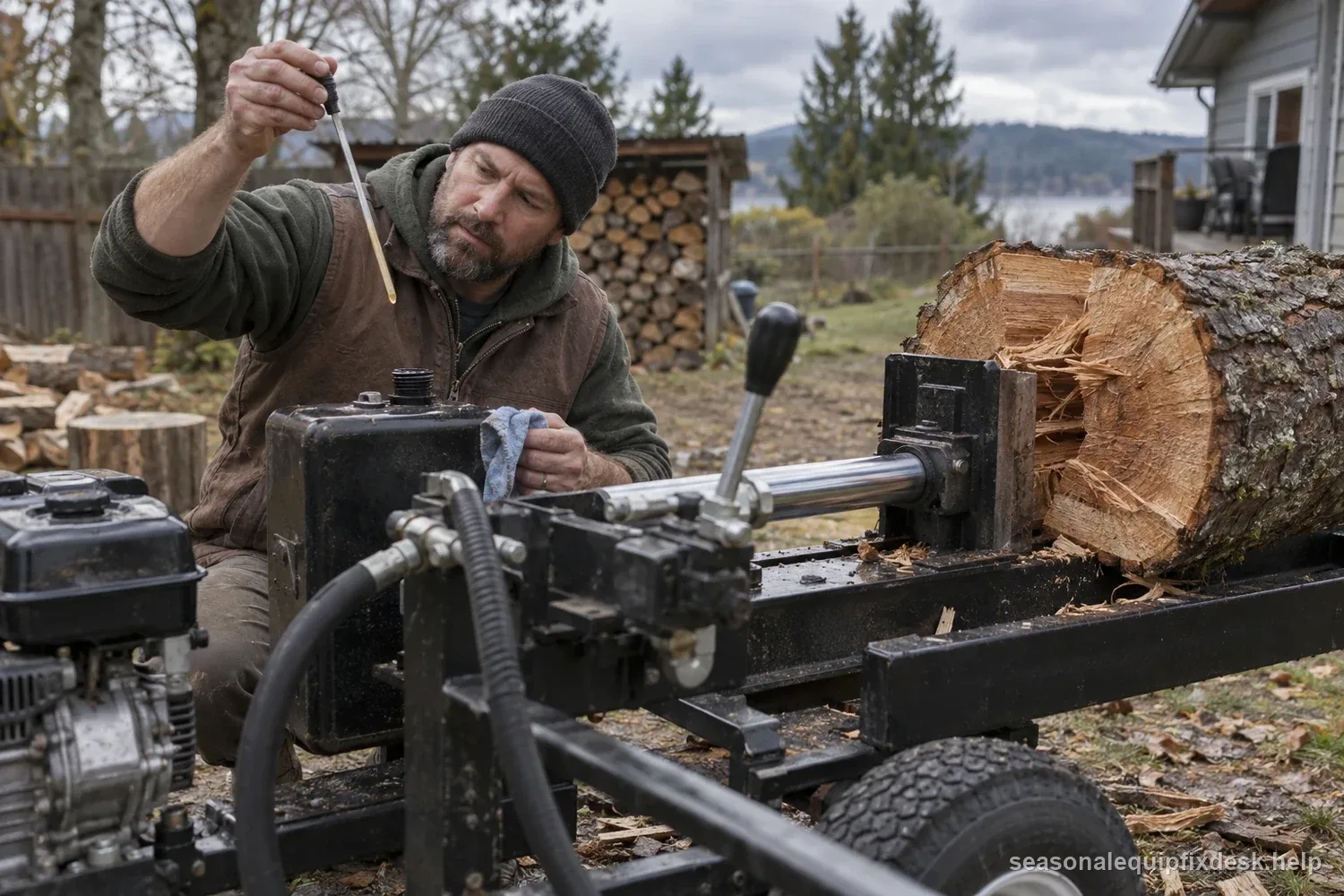
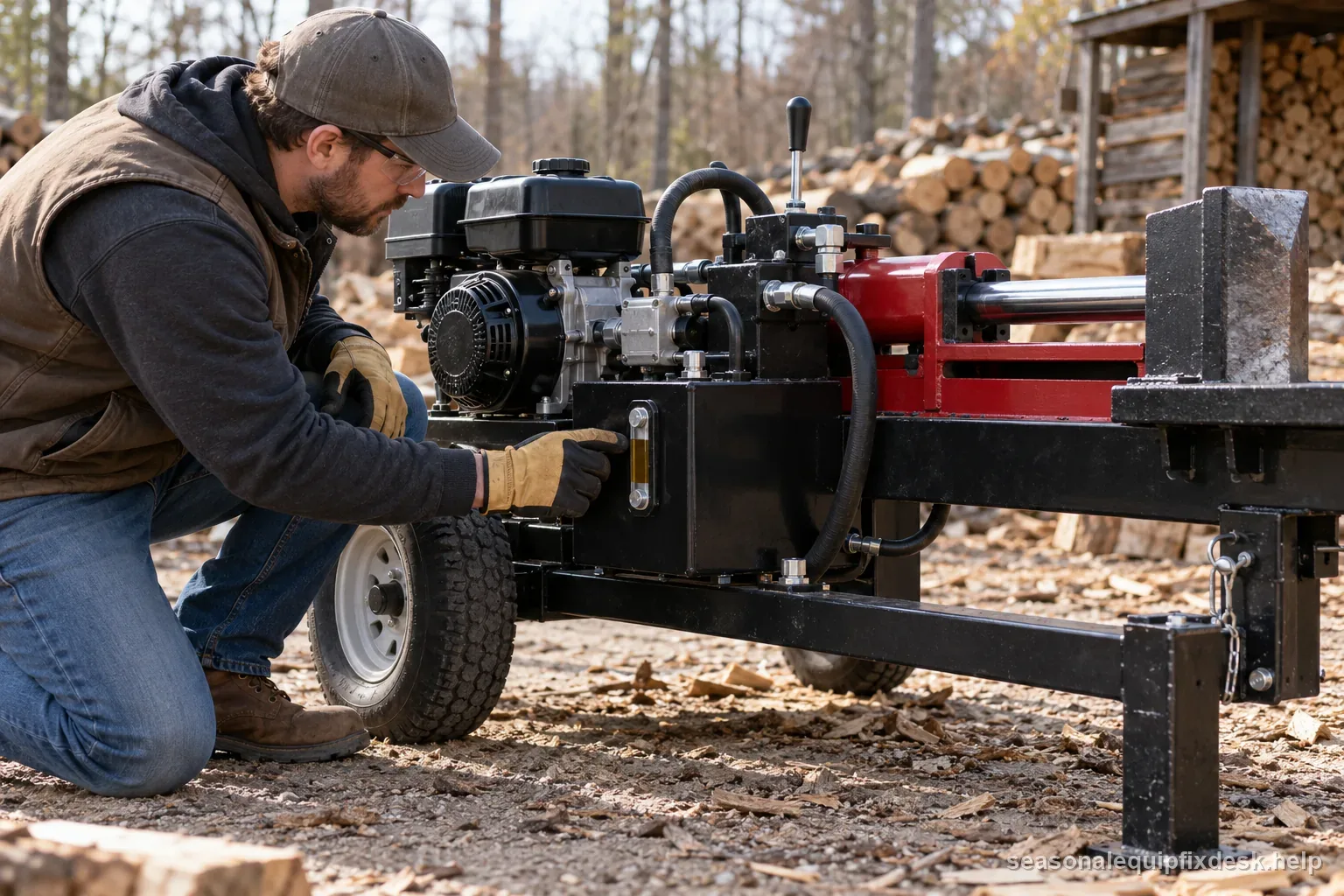
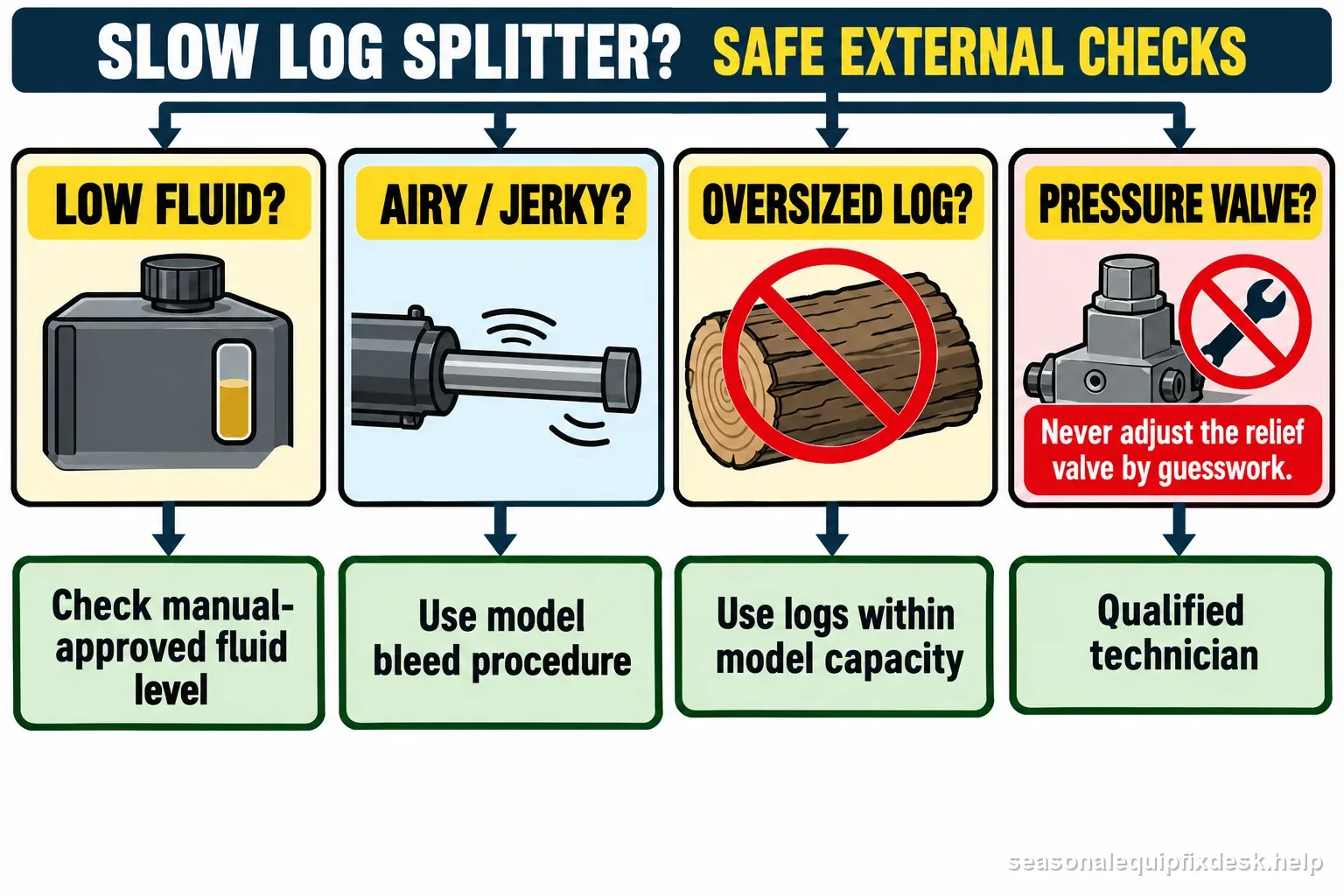
Check level only with the machine shut down, cool, on the required surface, and the cylinder in the position specified by its manual. Splitters differ: the correct ram position, sight glass or dipstick method, fluid type, and acceptable mark are model-specific. If the level is low, investigate why; a new drop can indicate a leak. Cloudy fluid, foam, or repeated level loss merits service rather than a blind top-off or drain.
Using the right fluid type matters more than people expect
There is no universal log-splitter oil grade. The manufacturer may specify hydraulic oil, a temperature-dependent alternative, capacity, and fill procedure for a particular model. Do not mix fluids or drain a system based on a generic online grade. If the problem began after a refill, compare the container and procedure with the exact manual and contact the maker if the specification is unclear.
Air in the system causes a soft, spongy cycle
Foamy fluid, pump whining, or jerky/spongy motion can be clues of aeration or a suction-side problem, but they do not identify the cause by themselves. Bleed or purge only if the exact manual calls for it and follow its steps; the procedure is not universal. Never loosen a cap, hose, or fitting on a hot or operating machine to “let air out.” If the manual procedure does not restore smooth motion, stop and have the system checked.
Cold weather makes hydraulic fluid genuinely sluggish
Cold fluid can slow a splitter, but do not warm it by improvising or repeatedly holding the valve at the end of stroke. Follow the maker’s startup and temperature instructions. Compare its normal cycle in the same ambient conditions, and stop if the pump is noisy, motion is jerky, or a leak appears.
A clogged filter or strainer starves the pump
A blocked filter can contribute to slow or noisy operation on models that use one. Follow the service interval and access procedure in the manual; do not open hydraulic plumbing while the system is hot or pressurized. If the filter is not listed as owner service, leave it to a qualified technician.
When it really is the relief valve or pump
If the ram travels normally until it contacts an in-rating log and then stops, possible causes include the wood exceeding the machine’s real capacity, engine speed/load, relief setting, pump, valve, or cylinder seals. These cannot be separated safely by turning a relief screw. Wallenstein manuals direct pressure-relief adjustment and several pump/cylinder faults to an approved technician. A model-specific gauge test belongs to service personnel using the manual’s pressure limit and procedure.
Handle hydraulic fluid and fittings safely
A pinhole hydraulic leak can inject fluid through skin and is a medical emergency. Do not feel for leaks with a hand, paper, cardboard, or any body part, and do not tighten or open a fitting while running. Shut down, keep clear, and get qualified service for suspected high-pressure leaks. If fluid penetrates skin, seek emergency care immediately and tell clinicians it may be a hydraulic injection injury.
A simple maintenance routine catches most of this early
Checking fluid level and color at the start of each splitting season, before the first log rather than after the first stall, turns most of the causes above into a five-minute inspection instead of a mid-job troubleshooting session. Wipe the dipstick or sight glass clean before reading it, top off with the exact fluid grade specified in the manual rather than whatever hydraulic oil happens to be on the shelf, and note the fluid's color on a good day so a change to cloudy or dark fluid later is easy to recognize at a glance rather than something you have to guess about from memory.
Most manufacturers also recommend a full fluid change on a set interval — commonly measured in cords split or hours of use rather than calendar time — rather than topping off the same fluid indefinitely, since hydraulic oil does break down and lose some of its anti-wear properties with heavy use even if it never looks visibly dirty.
| Record | Use |
|---|---|
| Ram cycle unloaded and loaded | Separate a flow-speed symptom from a load/force symptom. |
| Wood species, size, grain, and knots | Check whether the example log is within the exact splitter rating. |
| Fluid appearance, level, and leaks | Compare only with the manual procedure; stop for foaming, heat, or fluid loss. |
| Model and symptom direction | Give the technician repeatable details without changing relief settings. |
Compare the machine's cycle unloaded and under a log only if the owner's manual describes that test. A ram that moves smoothly without wood but slows against an oversized, hard, or knotty piece may be meeting the splitter's capacity rather than proving a failed pump. A ram that is slow or erratic with no load points more strongly toward fluid level, trapped air, supply restriction, electrical supply on an electric model, or internal wear. Harbor Freight manual and the DR Power manual list these as distinct symptom paths and reserve pressure-setting or internal valve faults for qualified service.
Never compensate for weak splitting by turning a relief valve or pressure-limiting screw. The setting is machine-specific and can expose the cylinder, hoses, or frame to unsafe loads. If fluid is foamy, hot, leaking, or contains visible contamination, stop and use the model's service procedure; high-pressure hydraulic leaks can penetrate skin. Record whether the ram slows on the extend or return stroke, whether the problem follows a particular log, and whether it changes after the equipment cools. Those observations help a technician separate an operating-load issue from a hydraulic fault.
Keeping contamination out in the first place
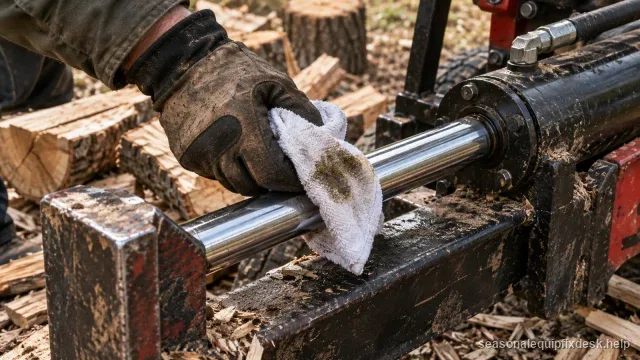
Wipe down the exposed cylinder rod after each use, before the ram fully retracts for storage, since dirt or grit riding in on the rod's surface can work its way past the seal on the next stroke and contaminate otherwise clean fluid from the inside — a habit that can undo the benefit of a recent fluid change faster than normal wear alone would. When topping off or refilling, pour fluid through a funnel with a fine mesh screen rather than directly from the container, and keep the reservoir cap on whenever the machine sits between splitting sessions, since airborne dust and wood debris settling into an open reservoir is a completely avoidable source of the exact contamination that shows up later as cloudy fluid and a sluggish cycle.
A quick pre-season check pays for itself
Before the first heavy splitting day of the season, cycle the ram a few times with nothing to split, watching for a smooth, consistent stroke rather than the spongy or hesitant motion described earlier in this guide. Catching a fluid or air problem during that empty test run, rather than mid-way through a full afternoon of splitting, means the fix happens on your schedule with the machine sitting idle in the driveway rather than stalled halfway through a stubborn log with firewood still to process.
| Pattern | Interpretation |
|---|---|
| Typical rated round splits | Normal baseline |
| Only an irregular round stalls | Compare with straight-grained wood |
| Several representative rounds stall | Stop and request model-specific service |
Log condition affects how much force is actually needed
Wood species, grain, knots, forks, and spiral grain affect splitting load. Compare with straight-grained wood within the model's size rating. If the splitter handles ordinary rounds but stalls only on irregular wood, the log may be the limiting factor; a hydraulic fault tends to recur across representative loads.
Low oil can reduce splitting force, but a visible leak changes the next step: use the log-splitter leak safety sequence and keep damaged lines out of service.
If the ram does not move at all rather than moving slowly under load, use the log-splitter ram no-movement checks to separate drive, control, and hydraulic symptoms.