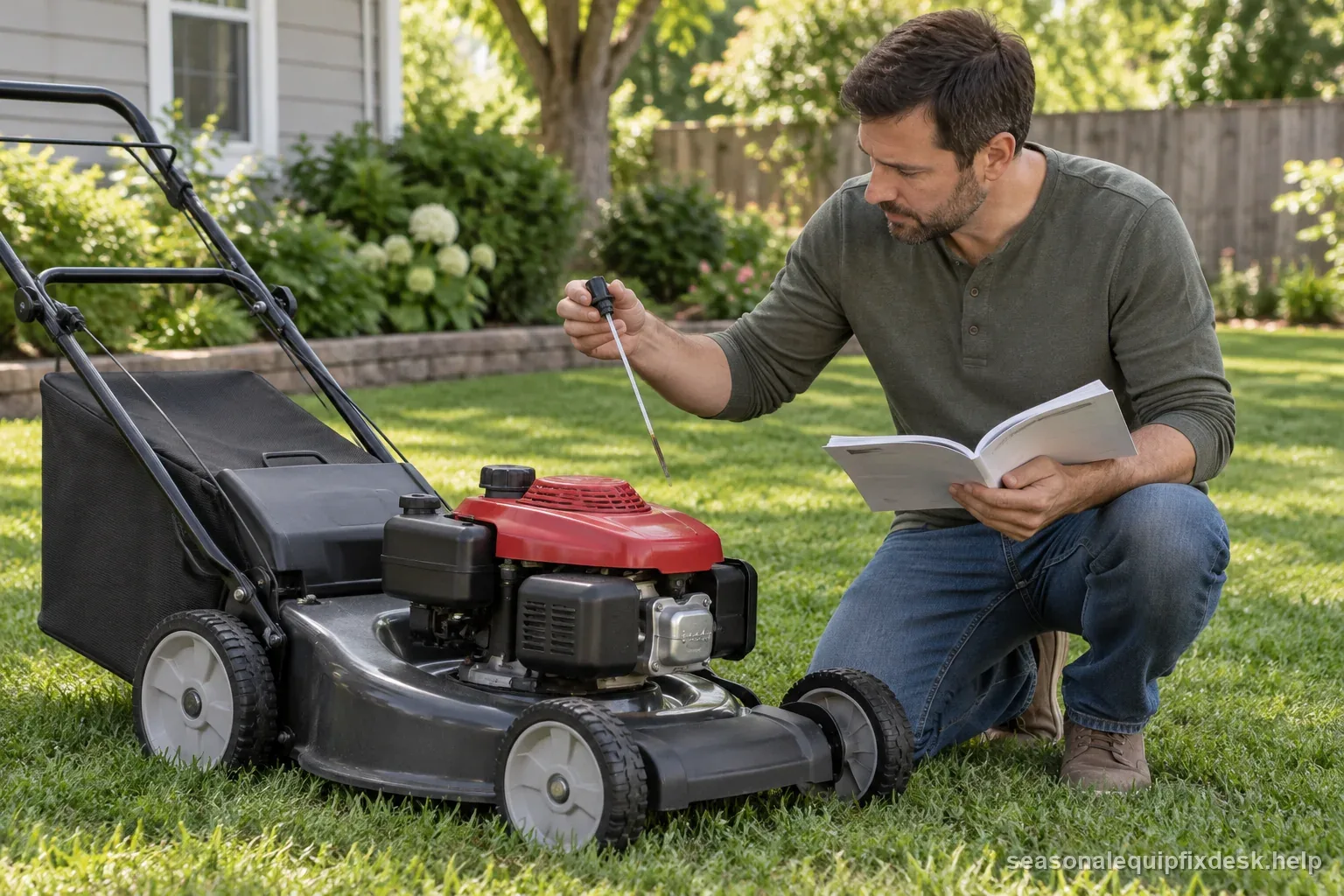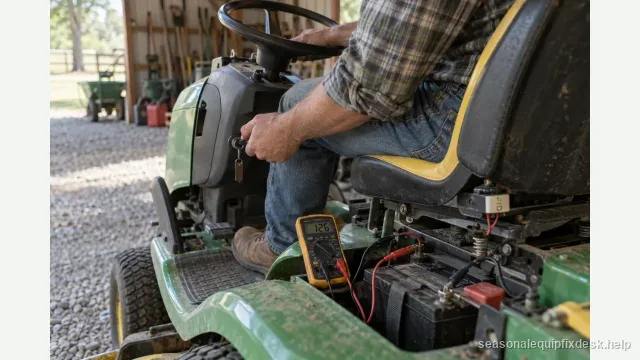
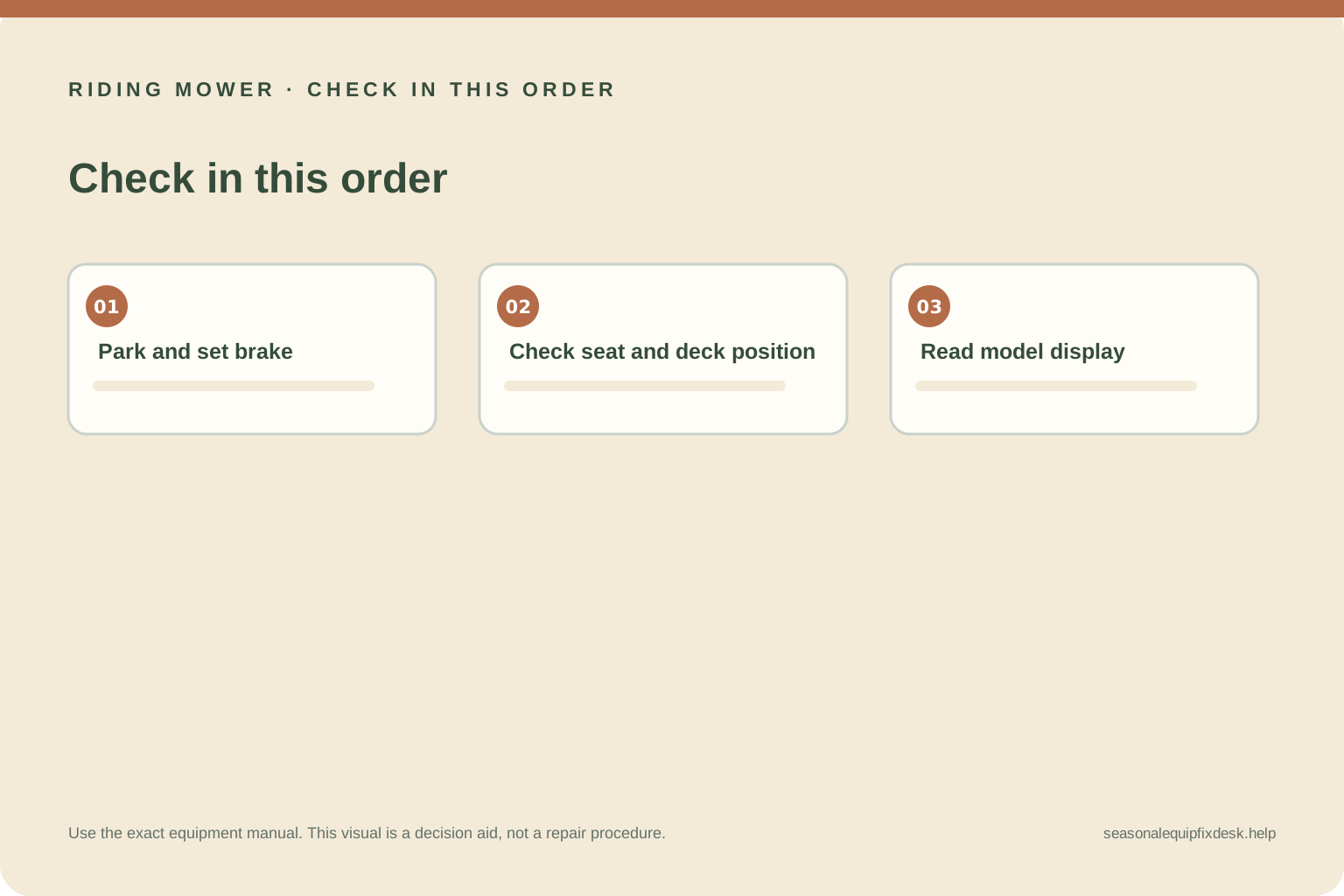
Quick answer: Park on level ground, disengage the PTO, set the parking brake, remove the key, and read the exact mower manual before checking anything under the deck. Some riding mowers require the operator to be seated, the deck wings lowered, control levers in a specific position, or engine speed set as directed before the PTO can engage. If those conditions are met and the blades still do not turn, stop and arrange service. Never bypass an interlock.
PTO controls differ: a pull knob, switch, lever, clutch, cable, or hydraulic system may all be described as PTO. This guide covers mower blades on riding equipment, not tractor implements or commercial hydraulic PTO shafts. Identify the exact model and attachment first; a service step for one mower may be unsafe or irrelevant on another.
Confirm the mower and attachment are configured to mow
Use the operator manual to confirm that the deck is fully lowered and latched, any fold-up deck wings are in the mowing position, and the discharge deflector or approved collection system is installed. Some machines intentionally prevent blade engagement when the deck is raised or folded. Do not reach under the deck to check blade movement. Keep bystanders away from the discharge area.
Check the documented operator conditions: seated position, parking brake state, motion-control levers, reverse option, and PTO switch position. Some manuals specify how the machine should be positioned before turning on the PTO. Do not guess based on a different model or hold a seat switch down with an object. The interlock is designed to prevent unsafe blade operation, not to create an obstacle to defeat.
Listen and observe from the operator position
With the mower in the configuration required by its manual, note whether the PTO indicator changes, a warning appears, the engine slows or stalls, or the clutch clicks. Do not repeat the engagement attempt if the belt squeals, a burning smell appears, the engine bogs sharply, or the blades begin and stop unpredictably. Those signs can point to a mechanical load, belt, clutch, switch, or interlock fault that needs inspection.
Record the deck size and attachment, engine model, switch style, warning light, and whether the failure began after storage, washing, belt replacement, impact, or electrical service. A belt that was routed incorrectly or a connector left disturbed during maintenance may be related. Do not remove panels or move wires to investigate; the service technician can use your timeline to follow the correct wiring diagram and parts list.
Separate a condition issue from a repair issue
| What you observe | Possible direction | Safe response |
|---|---|---|
| PTO indicator stays off | Switch position or interlock condition | Check the manual’s documented starting conditions |
| Indicator changes; blades do not turn | Belt, clutch, wiring, or mechanical issue | Stop; do not reach under the deck or keep cycling |
| Engine stalls or belt squeals | Excess load or drive fault | Disengage PTO and request inspection |
| Safety system behaves inconsistently | Interlock or control fault | Stop operating and contact an authorized dealer |
Inspect only visible, stopped equipment
Turn off the engine, remove the key, set the parking brake, and wait for all motion to stop before looking at exterior parts. From a safe position, check for a visibly displaced belt near an accessible guard only if the manual identifies it as an owner inspection. Do not put hands under the deck, remove a belt guard, turn a spindle, or loosen a clutch. Springs and belt tension can release suddenly.
Look for obvious external damage such as a bent guard, missing fastener, damaged wiring visible without removing a cover, or debris preventing the deck from reaching its normal position. If anything looks damaged or wet, do not operate the mower. Do not wash the deck to clear grass while the key is present or the blades could move. Use the cleaning method in the manual only after the machine is secured.
Do not jump wires or adjust the clutch by guesswork
Never bridge the seat, brake, reverse, or deck interlock; tape a switch in position; or pull a connector while the engine is running. A mower may start or spin the blades unexpectedly if a safety circuit is defeated. Do not use a test light or meter on the PTO circuit unless the manufacturer’s service procedure assigns that work to a qualified technician.
Clutch air gaps, belt routing, fuse types, and switch tests are model-specific. Toro manuals, for example, list belts, a PTO switch, safety interlocks, and an electric clutch among possible causes when blades do not rotate, while directing certain repairs to an authorized dealer. That list is a diagnostic map, not permission to replace components without confirming the model and procedure.
When to stop and what to tell the dealer
Stop for a damaged interlock, exposed wire, smoke, burning odor, repeated fuse failure, blades that engage with the switch off, or any control that works only when held or bypassed. Also stop if the mower stalls whenever the PTO is selected or the belt contacts a guard. Do not mow until the safety system and blade drive are repaired.
Give the dealer the mower and deck model numbers, exact indicator response, operator conditions you verified, sounds or smells, and what happened before the failure. Mention any recent belt, battery, deck, or switch work. Ask whether the shop will check the interlock system, belt path, clutch supply, and blade drive as applicable. Keep hands and tools out of the deck until service is complete.
Prevent a repeat failure
Before each mowing season, follow the owner manual’s inspection schedule for the deck, belt, guards, switches, battery, and wiring. Keep the underside clean using the specified safe method, replace worn parts with the listed components, and do not operate with missing guards. A PTO that engages consistently under the correct conditions is part of a safe mowing system; a defeated switch is not a repair.