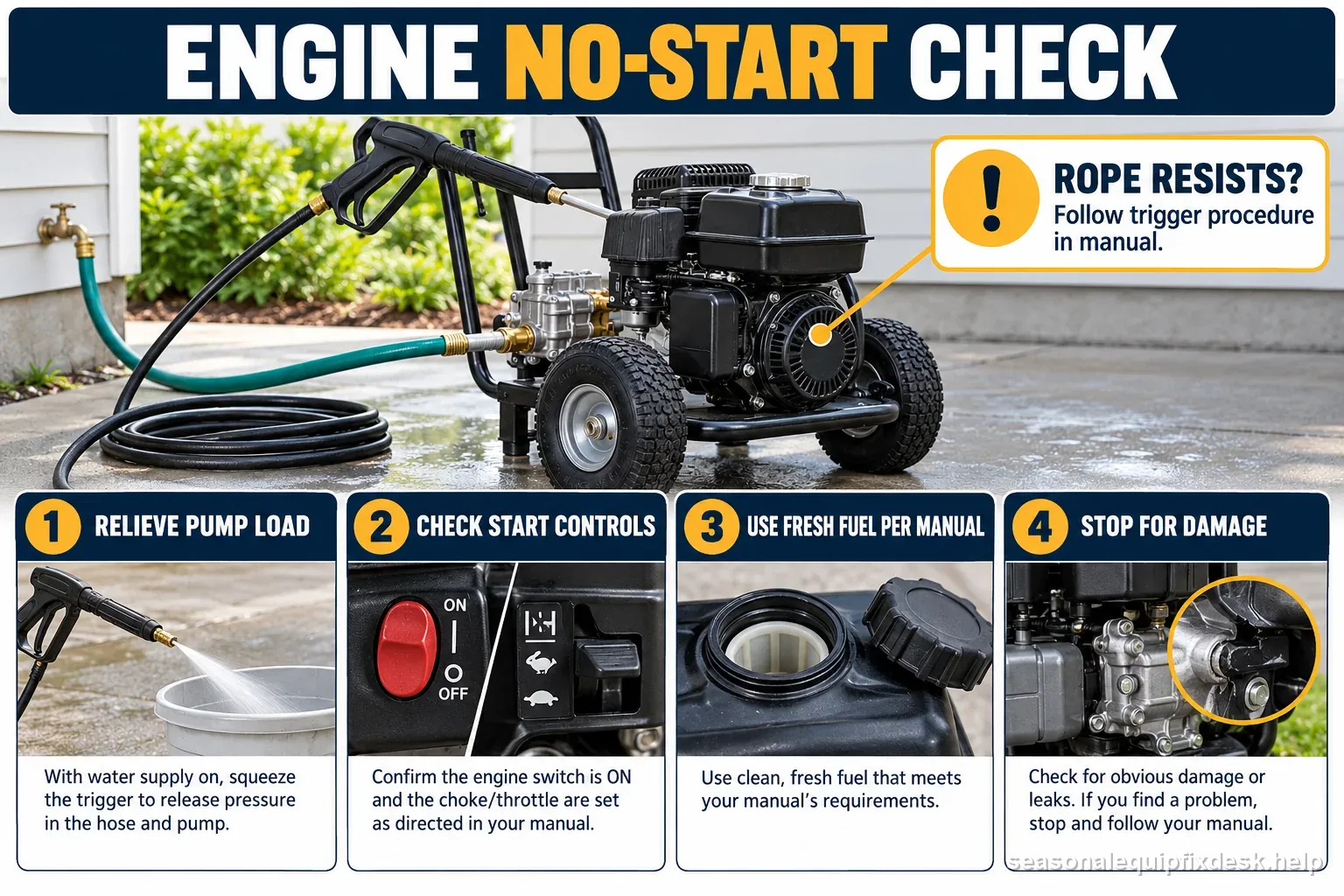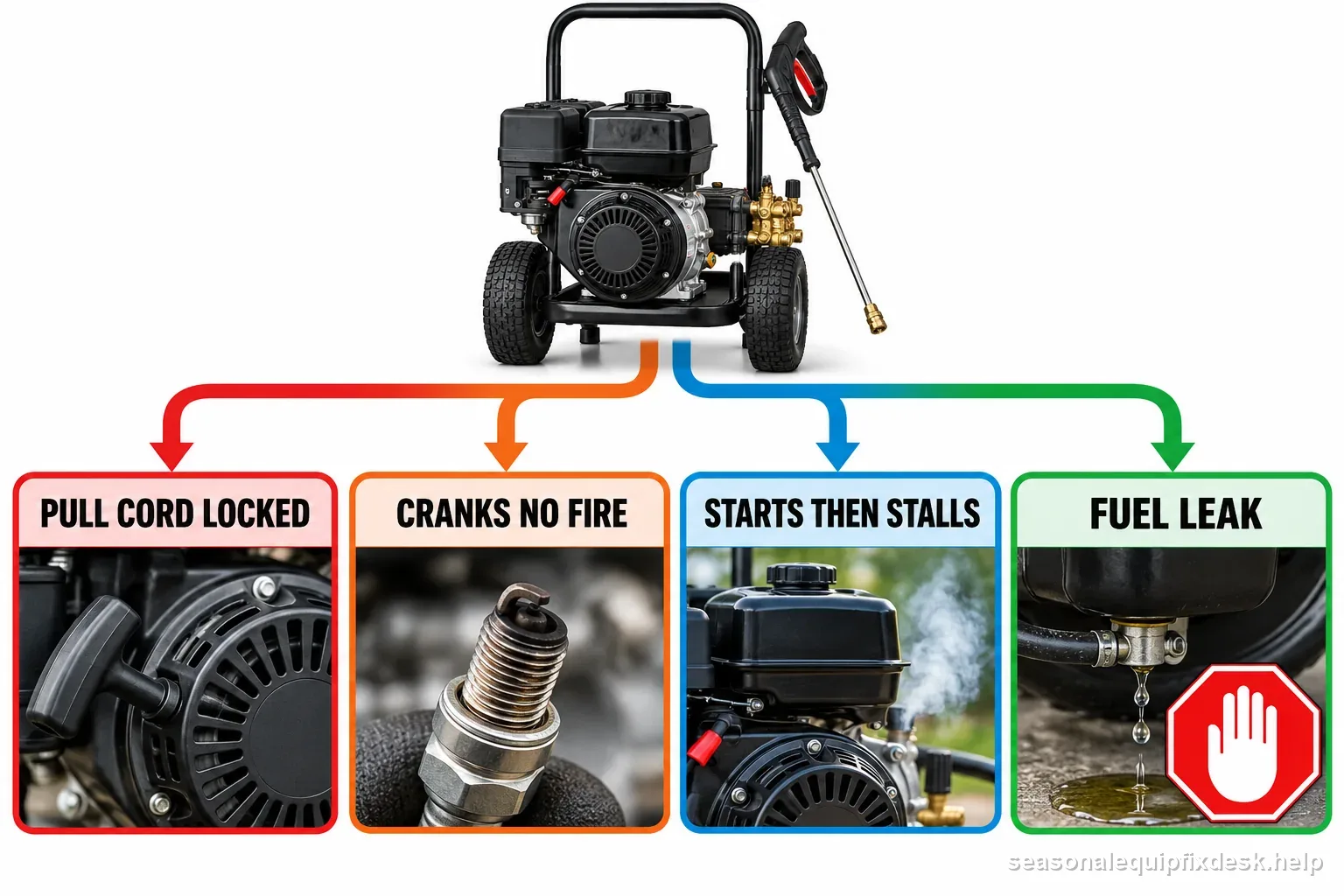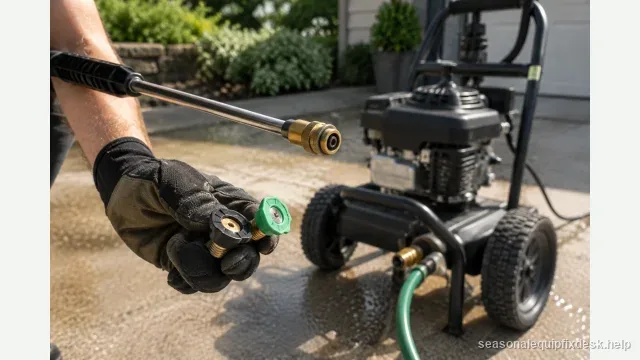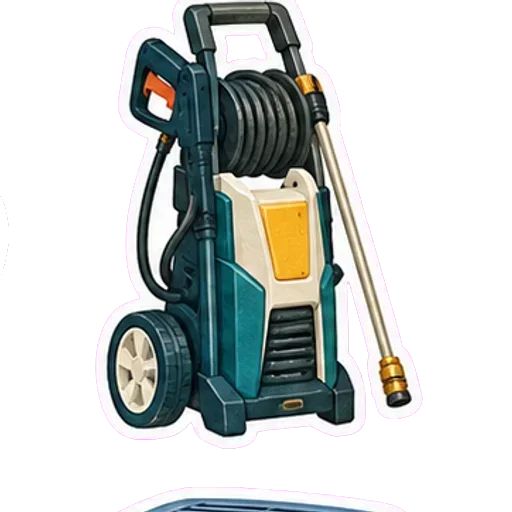
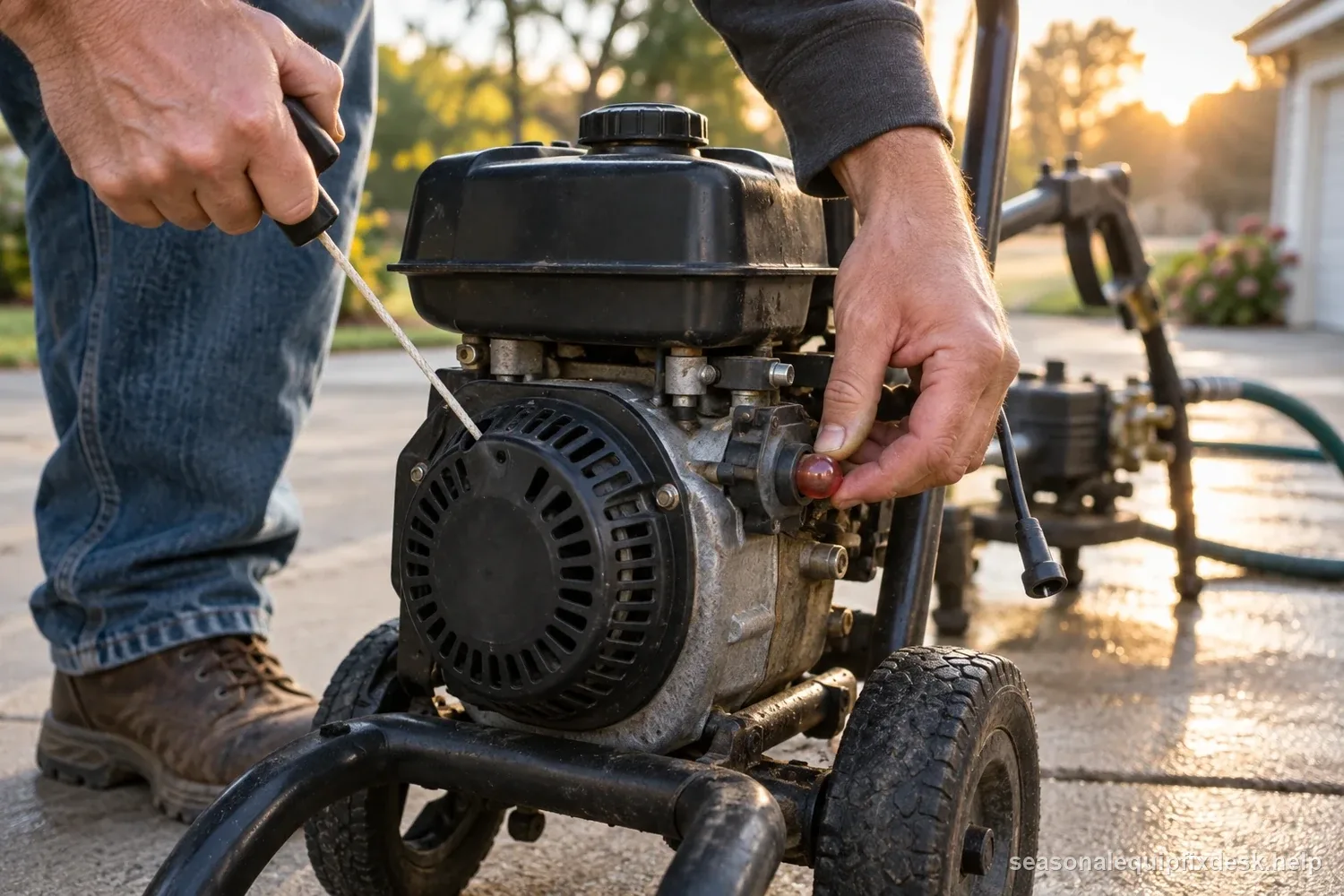
Quick answer: For a gas pressure washer that will not start, first identify whether the engine fails to turn, turns normally without firing, or starts and stalls. Check the exact washer and engine manuals for the start sequence. Keep the machine outdoors, on stable ground, with the spray gun pointed away from people. Do not force a starter rope, probe ignition near fuel, or open a fuel system that leaks or smells strongly of gasoline.
This page covers a gas engine that will not start. If the engine runs but spray is weak or absent, use the separate pressure washer no-pressure checks; nozzle and pump troubleshooting will not fix an engine that never fires.
| Starter symptom | Possible branch | Safe next step |
|---|---|---|
| Rope will not move normally | Stored pump pressure, recoil issue, or mechanical fault | Stop; use only the manual's pressure-release procedure |
| Turns normally; never fires | Controls, fuel, oil protection, air, or ignition | Check external controls and manual-listed basics |
| Fires briefly, then stops | Fuel quality/flow, choke transition, or oil level | Record timing; inspect for leaks; follow engine manual |
| Engine runs; spray is weak | Water path or pump, not engine starting | Switch off and follow no-pressure guide |
Start with the engine type and the exact controls
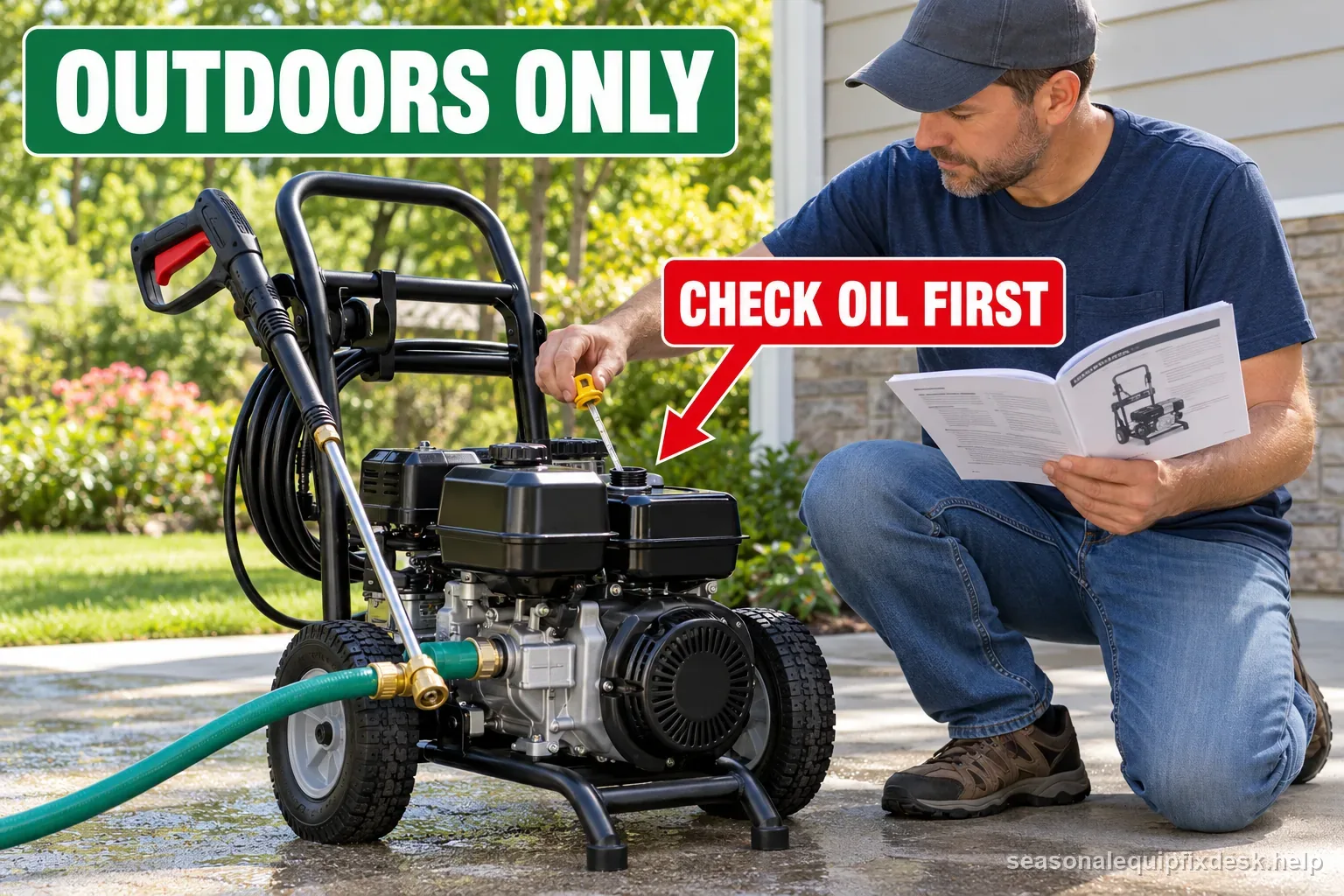
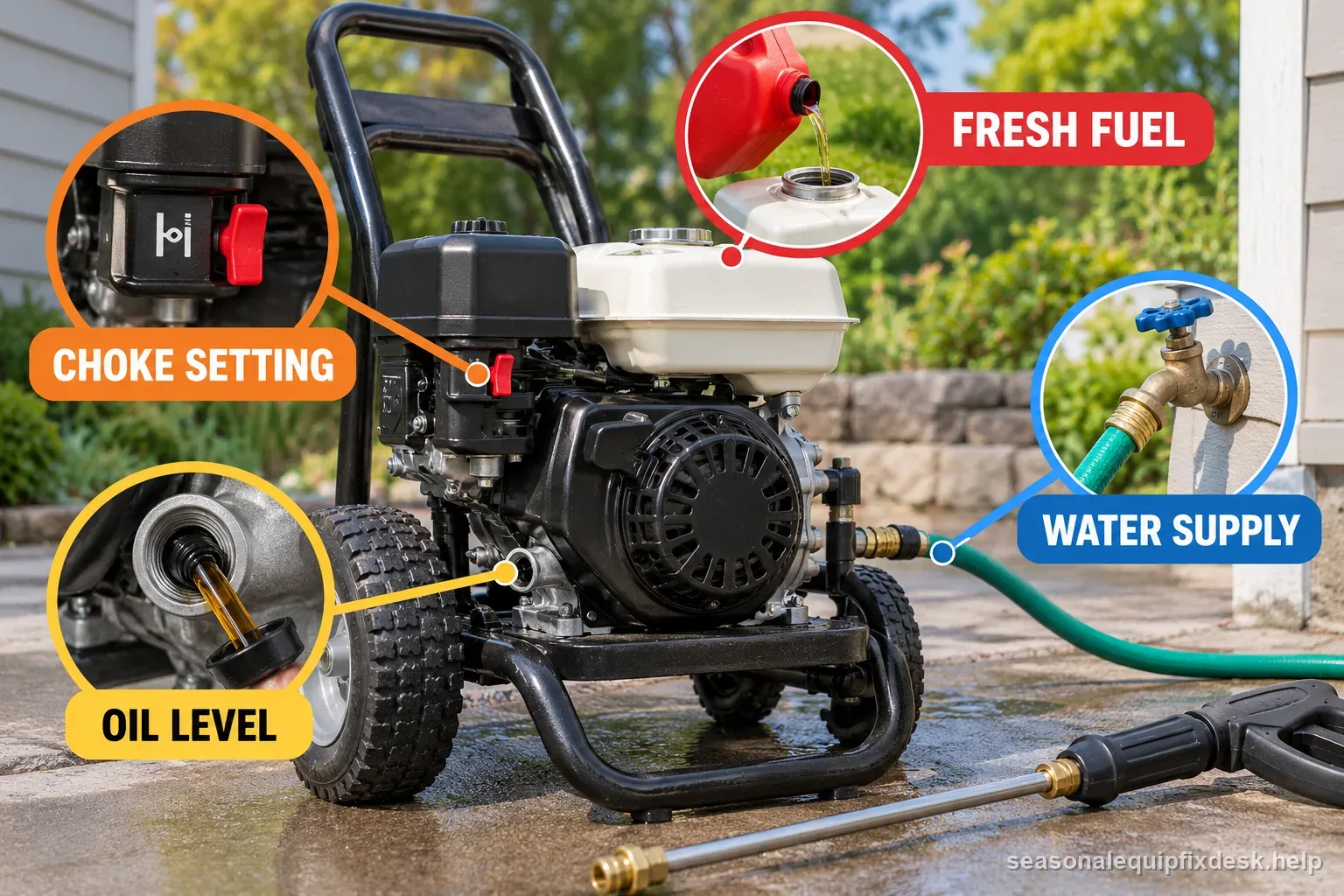
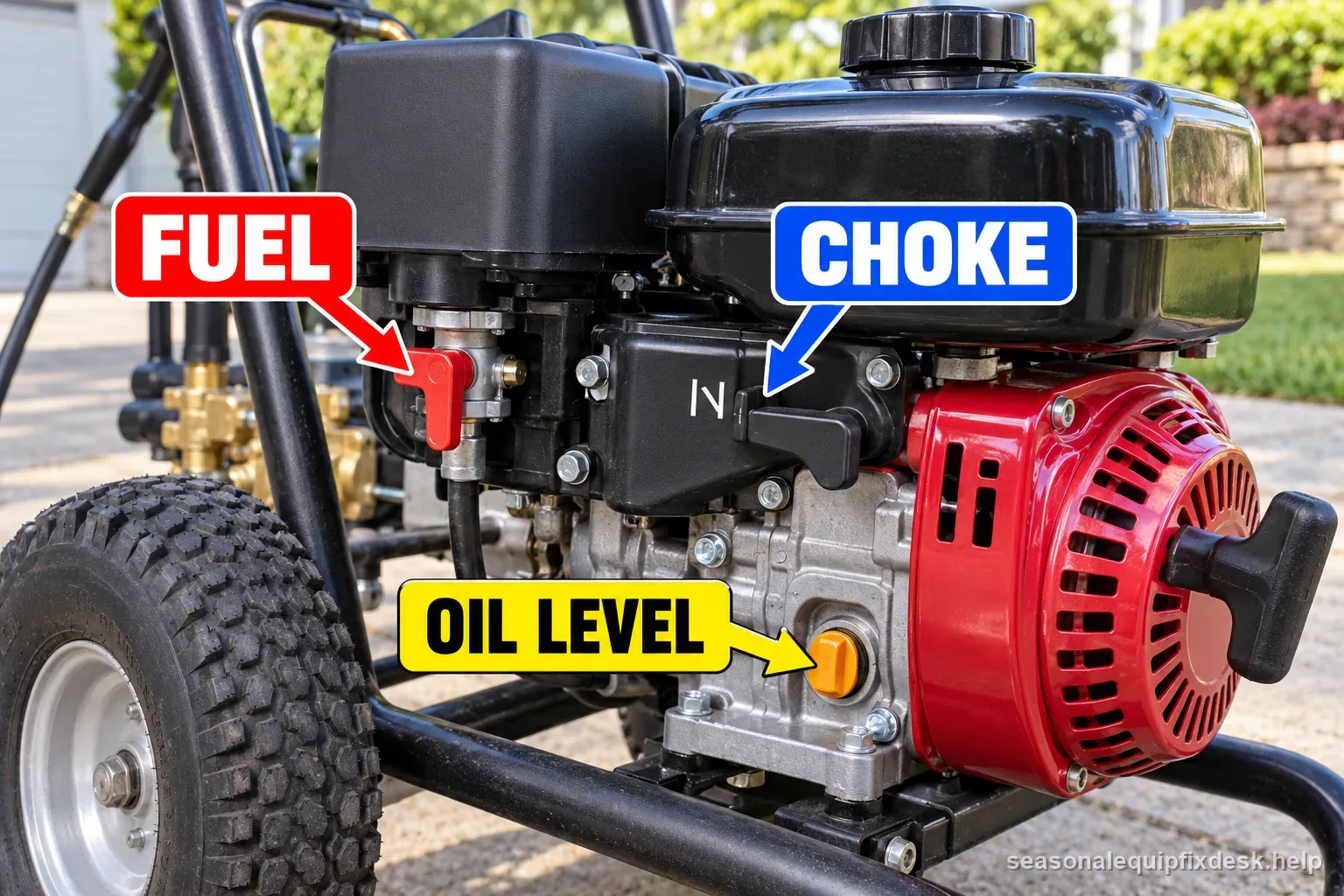
A washer brand and an engine brand may have different instructions. Find both model numbers and use the engine manual for choke, fuel valve, primer, oil, and spark plug details. With the engine off and cool, confirm the stop switch is in Run, the fuel valve is open if fitted, the tank contains the fuel specified by the manual, and the choke is in the model's starting position. Some controls are automatic or labeled differently; do not copy a sequence from another machine.
Before any starting attempt, place a gasoline pressure washer outdoors and away from doors, windows, and air intakes. Never run it in a house, garage, shed, carport, or other partly enclosed place: carbon monoxide can build up without warning. Stop and get to fresh air if anyone develops headache, dizziness, nausea, weakness, or confusion.
- IdentifySeparate no-crank, cranking/no-fire, and starts-then-stalls symptoms.
- CheckUse exact engine manual for controls, fuel, oil, and accessible filter checks.
- Release pressureIf the rope binds, stop and use only the manual-directed safe procedure.
- Retest or stopMake only a normal manual-directed attempt; stop for leaks, odor, damage, or abnormal resistance.
If the starter rope feels unusually hard, stop forcing it
Some gas washers mechanically load the pump while water pressure remains in the hose. Certain models direct the operator to squeeze the spray-gun trigger to release that pressure; other designs have a different procedure. Turn the engine off, stand steadily, point the wand in a safe direction, keep people clear, and follow the exact manual. Never tie or wedge the trigger open. If the rope still binds, makes a grinding sound, or will not retract, stop; repeated hard pulls can injure the arm or worsen a mechanical fault.
A hard pull does not prove the pump is frozen. Do not remove a plug, open the pump, or inspect a cylinder to diagnose it. If the manual's external procedure does not restore normal movement, contact authorized service.
Check fuel, oil, and air only through owner-accessible steps
Fuel left from a prior season can become unsuitable, and contaminated fuel can prevent firing or cause a brief start followed by a stall. With the engine cool and outdoors, check the fuel visually for water or debris and compare its age and type with the engine manual. If fuel is leaking, the tank is damaged, or there is a strong fuel odor, do not start, spark-test, or drain it beside ignition sources; stop and use qualified service.
Set the washer on a level surface and check engine oil exactly as the manual directs. Some engines include low-oil protection and will not run when oil is low or the machine is tilted. Add only the specified oil and amount. Inspect the air-filter housing externally; clean or replace a dirty filter only using the manual's procedure. Do not adjust carburetor screws to compensate for stale fuel or an unknown fault.
Keep ignition checks outside the no-start DIY boundary
A cracked or fouled spark plug can be one possible cause, but testing ignition can create a spark near gasoline vapor. Do not hold a removed plug against the engine, use an improvised wire, or crank the machine beside spilled fuel. Only remove or replace a plug if the engine manual describes it as owner maintenance, the engine is cool, the ignition is disabled exactly as directed, and you can follow the specified part and gap. If those conditions are unclear, have a repair shop test spark and fuel delivery.
| Observation | What it can narrow | Stop or continue? |
|---|---|---|
| No fuel leak; control position was wrong | Starting setup | Correct once per the manual, then make a normal attempt |
| Fuel is old or visibly contaminated | Fuel-quality branch | Do not run it; use manual-approved handling or service |
| Oil is below the marked range | Possible low-oil shutdown | Correct on level ground with specified oil; stop if it persists |
| Normal setup; still no start | Ignition or fuel-system fault | Shop diagnosis; no improvised spark or carburetor work |
Two manual examples show why procedures must stay model-specific
Worked example 1: A Westinghouse WPX2600 troubleshooting chart lists three primer-bulb presses for that model when it is not properly primed. If the washer is a different model, use its own stated count; three presses is not a universal pressure-washer rule.
Worked example 2: A Simpson MS Horizontal Series manual says that if its engine has not started after two pulls, squeeze the gun trigger to relieve pump pressure, then use its specified slow-to-resistance and rapid-pull sequence. That “two pulls” instruction belongs to that manual and does not authorize extra attempts on a machine with fuel odor, unusual resistance, or another warning sign.
| Observed symptom | Likely branch | Model-safe next check |
|---|---|---|
| Rope hard to pull | Pump pressure may be trapped | Use trigger/starting method in the washer manual |
| Rope normal; engine never fires | Controls, fuel, ignition, or engine | Check the exact start settings and fresh fuel |
| Starts then dies | Fuel, choke transition, or oil-level protection | Record when it stops before replacing parts |
| Engine runs; spray is weak | Water path or pump issue, not engine start | Use the separate pressure guide |
Use a short checklist, then stop at the boundary
- Record the washer and engine model numbers and whether the rope turns normally.
- Confirm safe outdoor placement and the manual's switch, valve, choke, and primer settings.
- Check fuel condition and oil level only with the engine off, cool, and on level ground.
- Look for leaks, damaged wiring, a loose plug boot, or signs of impact without opening the fuel or ignition systems.
- Stop for a fuel leak or strong odor, abnormal rope resistance, grinding, smoke, repeated stall, or any step the manual reserves for service.
Do not keep pulling to “clear” a suspected liquid-locked engine, and do not remove the spark plug unless the exact manual gives a safe owner procedure. A shop can distinguish fuel delivery, ignition, compression, recoil, and pump-related faults with the correct tools and model data.
Prevent seasonal no-starts before storage
For equipment used only a few times each year, make a storage plan before fuel sits unused. Follow the engine maker's instructions for approved fuel, stabilizer, draining, and storage; different manuals give different options. Stabilizer does not restore stale fuel or repair a restricted carburetor. Store the machine dry and protected from freezing as its manual directs, and never run it indoors to warm or test it.
Use the starter checklist and checklist figure as a record, not as permission to continue past a warning. If the engine starts and runs but the water output pulses, the separate pressure-pulsing guide follows that symptom.
- Initial symptom and conditions
- Controls, settings, and supply checked
- Inspection finding before adjustment
- Single change made and result
- Any stop condition or unresolved fault