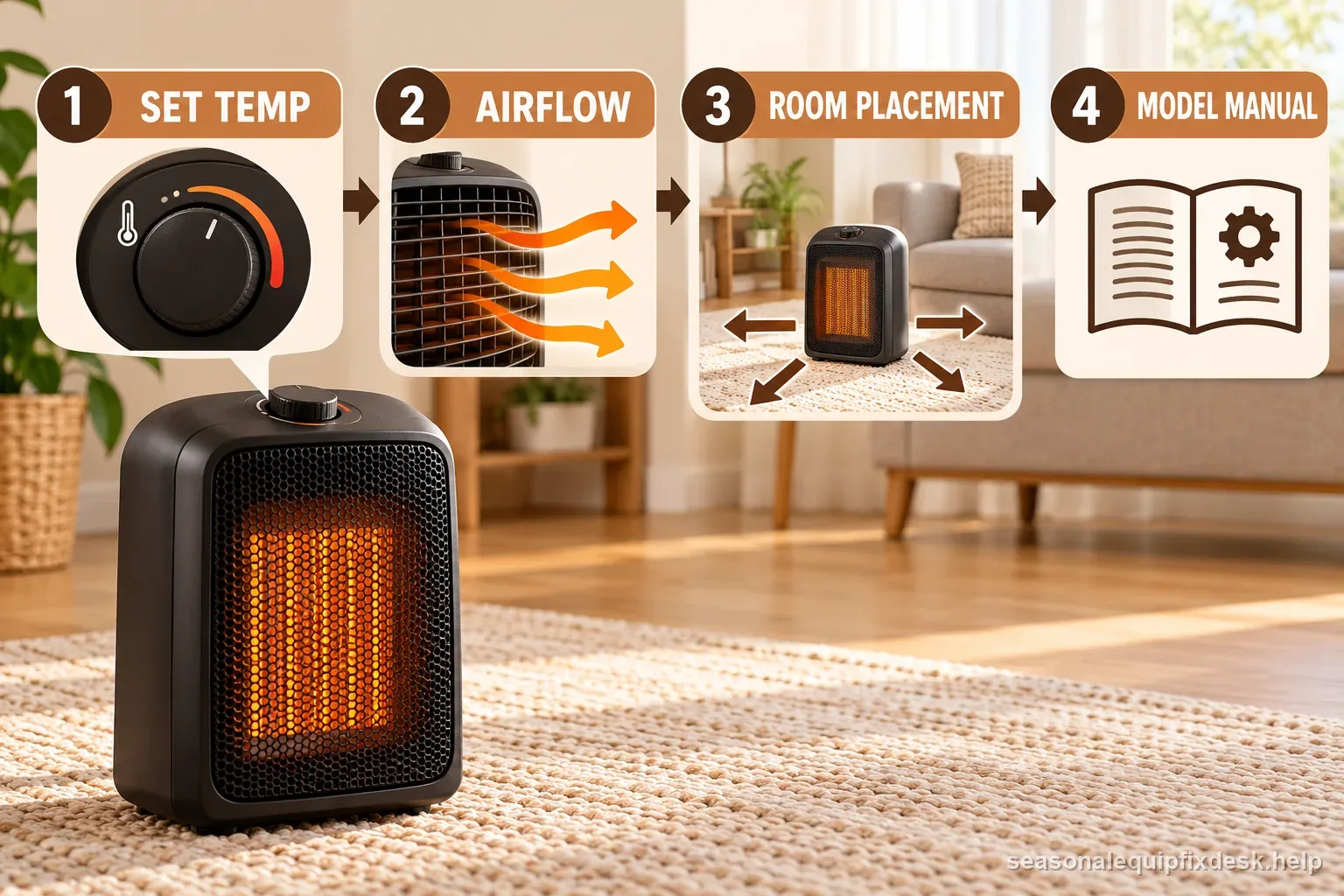

Quick answer: A space heater that keeps shutting off may have reached its set temperature, hit a timer, or activated tip-over or overheat protection. Check which lights remain on, note when it stops, and confirm the mode and placement in the exact manual. Unplug and cool it before clearing an obstruction. Stop use if it will not shut off or shows cord or outlet damage.
A thermostat cycling issue is different from an unusual odor or damaged cord. Check the space heater burning-smell safety signs first if the smell is strong or persistent.
If your heater uses a sealed oil-filled radiator rather than a fan or ceramic element, follow its external thermostat, outlet, clearance, and warm-up checks before considering service. See the oil-filled radiator that stays cold guide for the matching checks.
| Symptom | Possible explanation | Next step |
|---|---|---|
| Reading differs from wall | Sensor near heater measures local air | Compare with nearby thermometer |
| Cycles around setpoint | Normal thermostat band | Try small documented setting change |
| Timer/mode limits heat | Settings or schedule | Check manual and display |
| Persistent overshoot or no control | Sensor/control fault | Stop; arrange service |
| Observation | Possible meaning | Next step |
|---|---|---|
| Cycles after room warms | Normal thermostat response | Compare setting with a room thermometer |
| Stops soon after startup | Airflow or overheat protection | Unplug, cool, and check manual clearance |
| Room reading disagrees | Sensor location may differ | Move drafts and heat sources away |
| Trips or will not restart | Possible safety or electrical fault | Stop resets and contact service |
Where the room sensor sits matters more than the dial setting
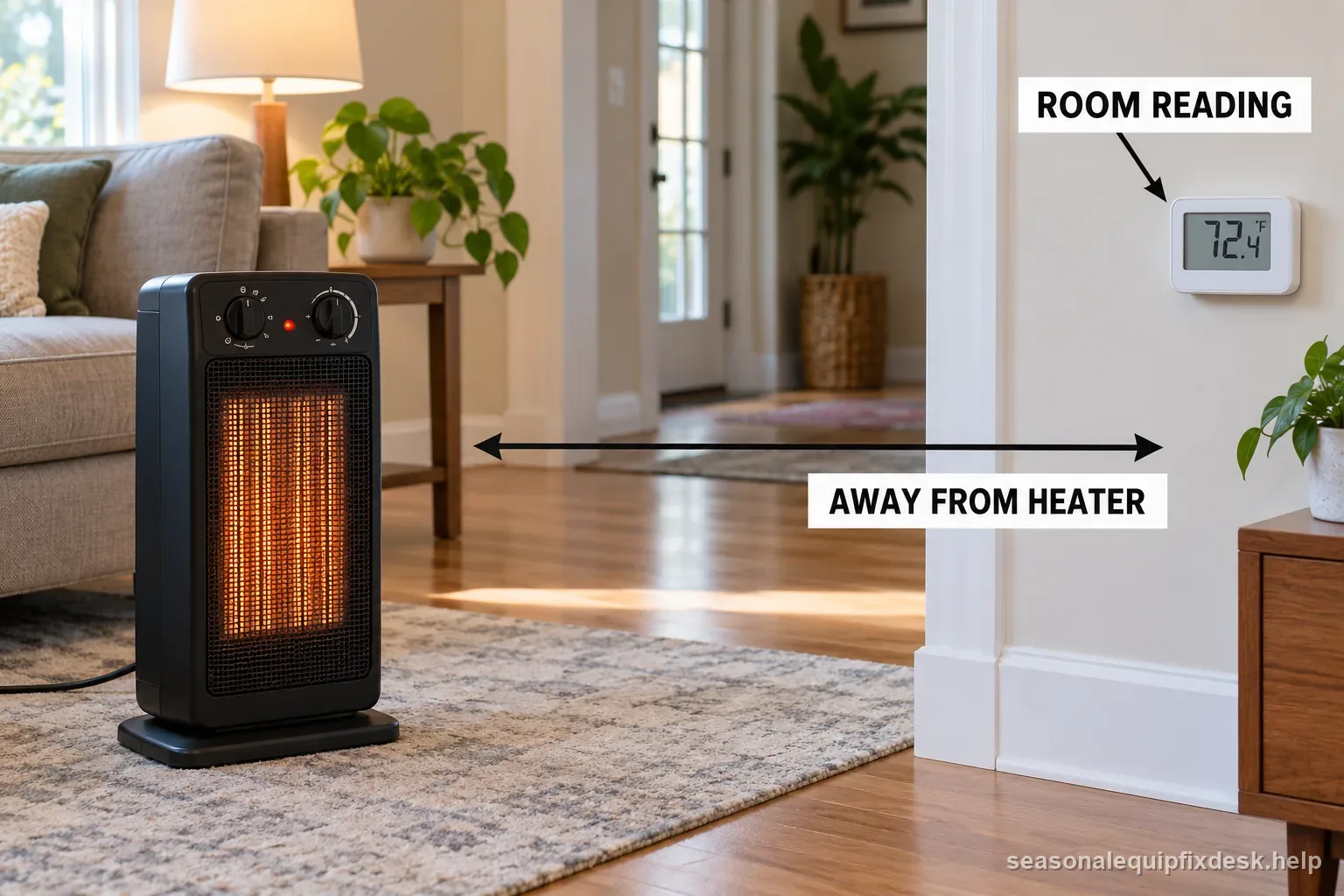
Most space heaters read room temperature through a sensor built into the unit's housing, positioned to sample the air near the heater rather than the room as a whole. If the heater is placed close to a wall, in a corner, or near where its own warm exhaust air recirculates back toward the intake, the sensor reads a warmer temperature than the rest of the room actually is — which makes the heater shut off early, well before the room feels as warm as the dial setting suggests it should.
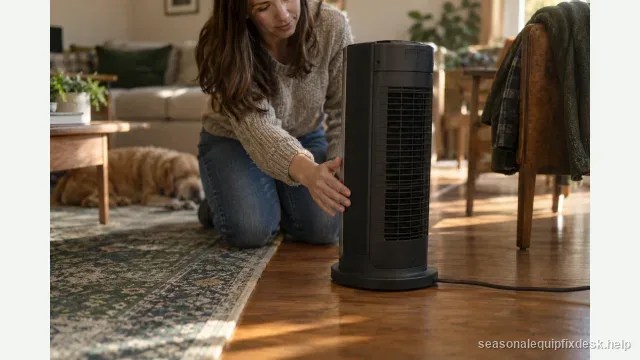
Before assuming the thermostat itself has failed, try relocating the heater to a spot with better airflow around it, away from walls and corners, and see whether that alone changes the behavior. This single placement issue causes a meaningful share of reported thermostat problems that aren't actually a hardware fault at all.
- ObserveConfirm mode, thermostat setting, and the observed symptom.
- InspectCheck placement, airflow, and the power connection externally.
- IsolateCompare the behavior with the relevant control or safety feature.
- Retest or stopRun only the safe retest described for this complaint. Stop using the unit when the article identifies a stop-use condition.
A heater that runs constantly and never cycles off
If the heater never shuts off regardless of room temperature or dial position, the thermostat's internal switch may have failed in the closed position, or the temperature sensor itself may have failed in a way that reads permanently cold. Either failure mode means the heater's control circuit never receives the signal to cut power to the heating element.
This is a safety-relevant failure, not just an inconvenience — a heater that can't shut itself off is a fire-risk condition, especially if left unattended. A heater exhibiting this specific symptom should be unplugged and not used again until it's inspected or replaced, rather than worked around by unplugging it manually every time it needs to turn off.
A heater that overshoots the set temperature significantly
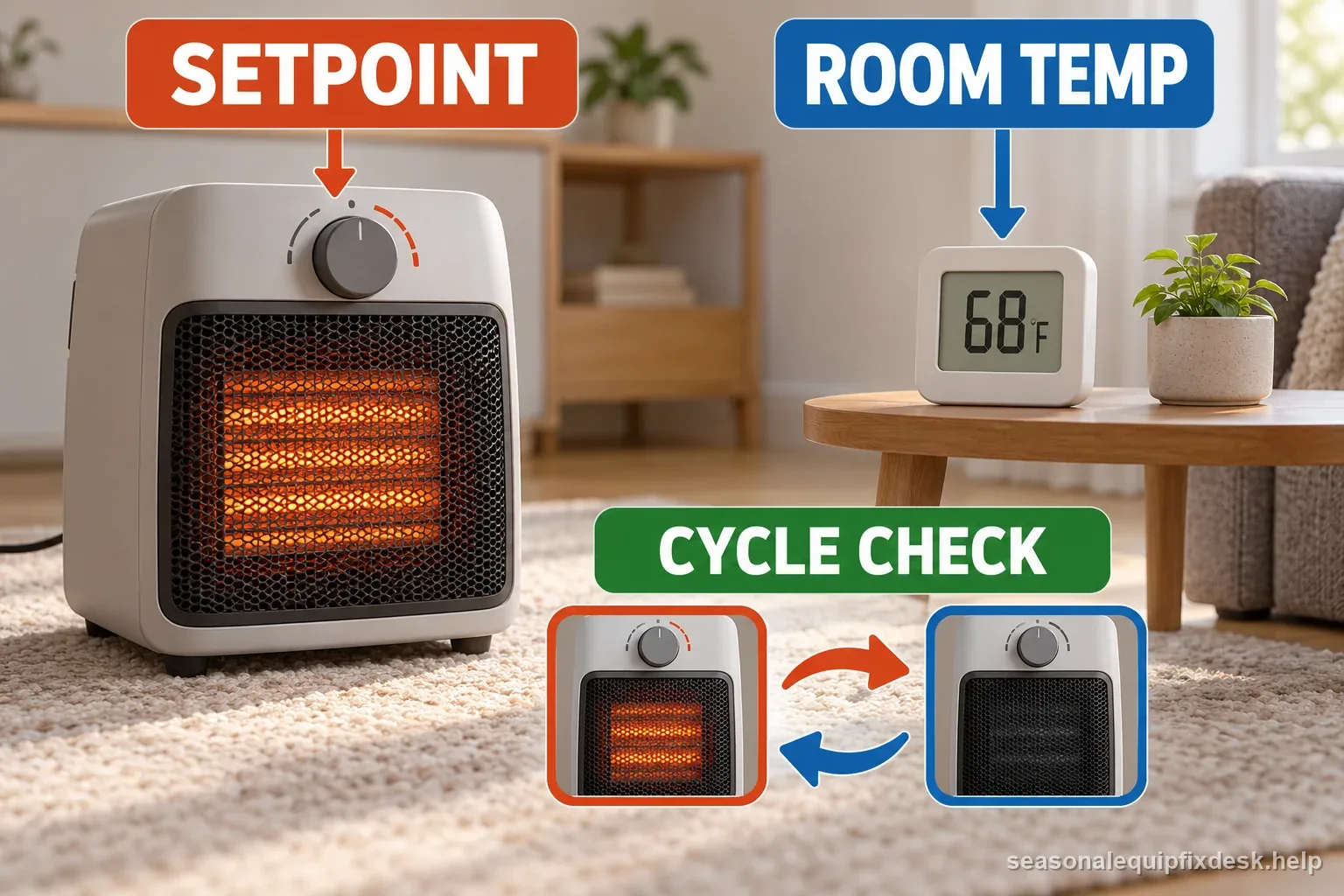
Some overshoot is normal in any thermostatically controlled heater — most cycle on a few degrees below the target and off a few degrees above it, which is a designed dead-band, not a defect. A heater that overshoots by ten degrees or more, making a room noticeably too warm compared to the dial setting, points to a sensor that's reading inaccurately rather than a dead-band that's simply wider than expected.
Compare the heater's actual behavior against a separate room thermometer placed a few feet away from the unit, out of its direct airflow. If the room thermometer shows a temperature meaningfully different from what the heater's setting implies it should be, that comparison confirms a sensor accuracy problem rather than a placement issue you can simply work around.
A dial or digital setting that doesn't seem to do anything
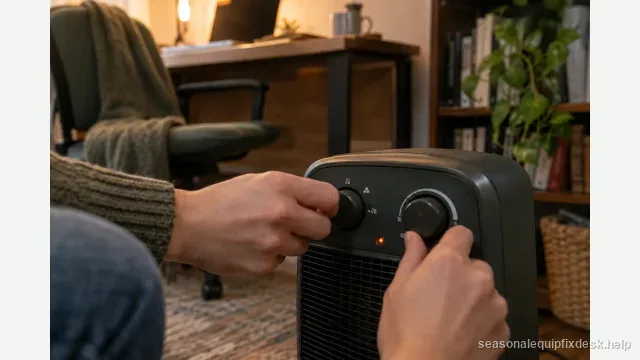
If turning the dial or changing a digital setting produces no noticeable change in heater behavior at all, the thermostat's control mechanism itself — the physical switch behind a dial, or the control board on a digital unit — has likely failed rather than the sensor being inaccurate. This is a different failure mode from overshoot or early shutoff, since here the heater isn't responding to input at all rather than responding to a wrong temperature reading.
On mechanical dial thermostats, this sometimes traces back to a broken or disconnected linkage between the dial and the internal switch, which in some models is a simple, inexpensive repair. On digital units with an electronic control board, a non-responsive setting more often points to a board failure that isn't practical to repair at the component level for most owners.
| Observed pattern | More consistent with normal cycling | Needs a fault check |
|---|---|---|
| Room near setpoint | Short off periods; warm output returns | Large temperature error; repeated cutout |
| Air intake clear | Unit follows its control setting | Overheat protection repeats |
| Plug and cord intact | No heat damage or odor | Heat, odor, or discoloration; stop use |
When cycling seems unusually frequent
A heater cycling on and off every minute or two, rather than running for a more sustained period between cycles, can point to a sensor with a narrow or inconsistent dead-band, or to the heater being placed somewhere with rapidly fluctuating local air temperature — near a doorway with a draft, for example, rather than in the room's general airflow.
Frequent cycling isn't just an annoyance; it puts more wear on the switching components with every on-off transition than a heater that cycles less often, which can shorten the thermostat's working life over time.
A practical order of operations
- Check the heater's placement — relocate away from walls, corners, and its own recirculating exhaust before assuming a hardware fault.
- Compare actual room temperature using a separate thermometer against what the heater's setting implies it should be.
- Note the specific symptom: never shuts off, overshoots significantly, doesn't respond to dial changes, or cycles unusually often — each points to a different likely cause.
- If the heater never shuts off, unplug it and stop using it rather than working around the problem.
Do not bypass a tip-over switch, breaker, or other safety control to keep testing. A repeated shutdown, hot outlet, wet unit, or burning smell changes the next step described in the article.
Two short observation logs
These sample logs illustrate what to record; their values are not thresholds.
Example 1: the heater pauses but remains powered
Sam selects 70°F. After 25 minutes, a separate thermometer reads 69°F; the display stays lit, then heat returns without a reset. Sam records the mode and placement, then checks the manual. That evidence can fit normal setpoint cycling.
Example 2: the heater keeps running past the setting
Lee selects 68°F. A room thermometer reads 76°F while the heater keeps heating and ignores the control. Lee switches it off, unplugs it when safe, and stops use. Do not open the housing or bypass controls; contact service.
When to replace rather than repair
On most consumer space heaters, the thermostat and its control board aren't designed to be user-serviceable, and the cost of a professional repair often approaches or exceeds the cost of a new unit. A confirmed thermostat failure — especially one where the heater won't shut off — is generally a replace-the-unit situation rather than a repair project for a typical household space heater.
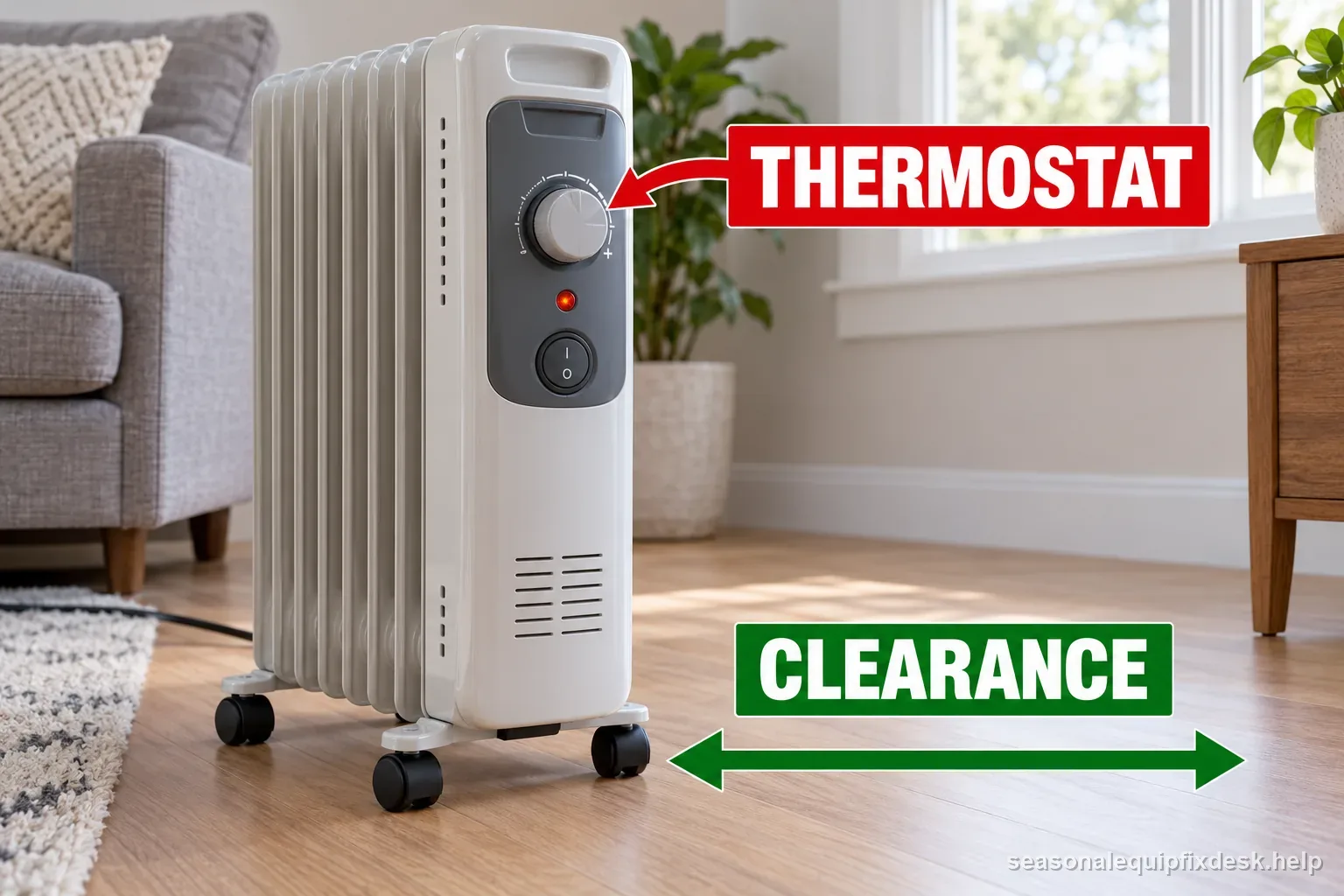
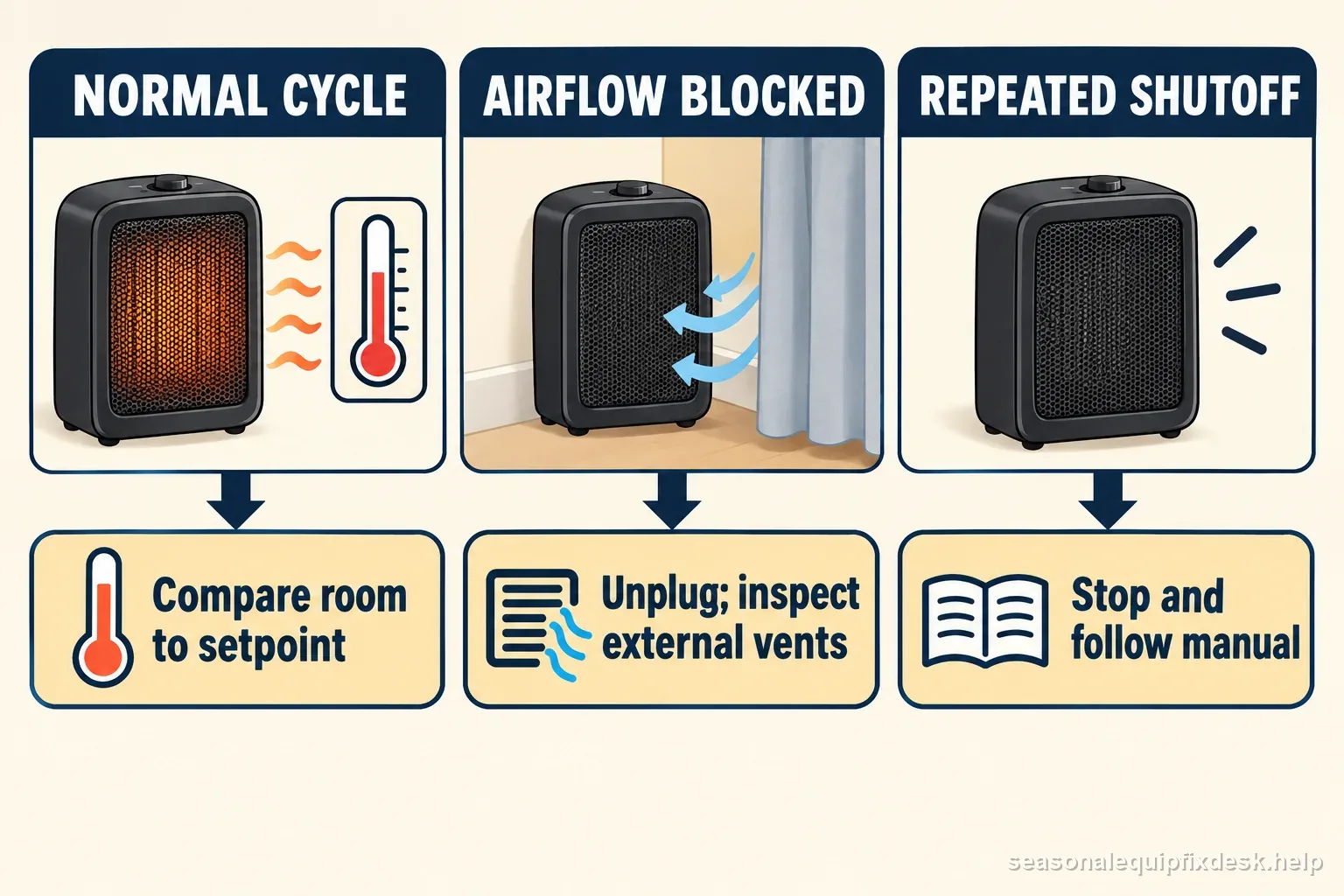
First decide whether the heater is actually failing to regulate or simply pausing after the room reaches its set temperature. A thermostat-controlled model may switch its heating element off while the fan continues briefly, then call for heat again as the room cools. On one Honeywell EnergySmart model, the owner manual says the unit can appear off after reaching the desired setting and directs users to check the setpoint and external obstructions. That behavior is model-specific, so compare the display and operating mode with your own manual before treating each pause as a bad thermostat.
Use the model manual’s reset sequence: switch off, unplug, cool, clear the obstruction, wait for its stated interval, then retry. Do not transfer another model’s timing. Keep the heater away from drafts and combustibles; never open the housing. Repeated shutoff or overheating needs service.
For a useful retest, note the selected mode, setpoint, room reading, heater location, and whether the fan stops with the element. Change one condition at a time and allow the model's specified response time. If the symptom repeats with open airflow and a valid setting, contact the maker or replace the unit rather than experimenting with internal thermostat wiring.
Reducing thermostat wear going forward
Placing a space heater with clear airflow on all sides, away from walls, furniture, and corners, both improves how accurately its sensor reads the room and reduces how often it has to cycle to maintain a set temperature. Avoiding placement directly in a drafty spot — near an exterior door or a window with air leakage — also prevents the kind of rapid, unnecessary cycling that adds wear to the thermostat's switching components over time.
For the matching drive or fuel symptom, see fan-only operation or absent heat.